
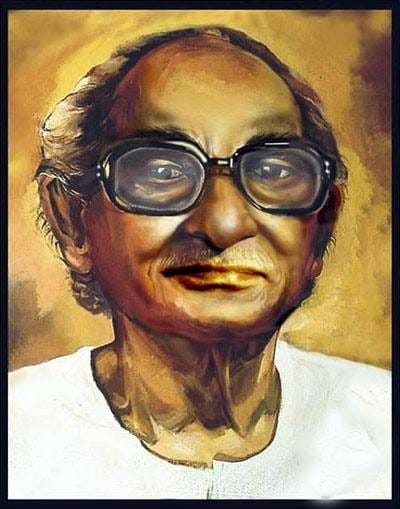
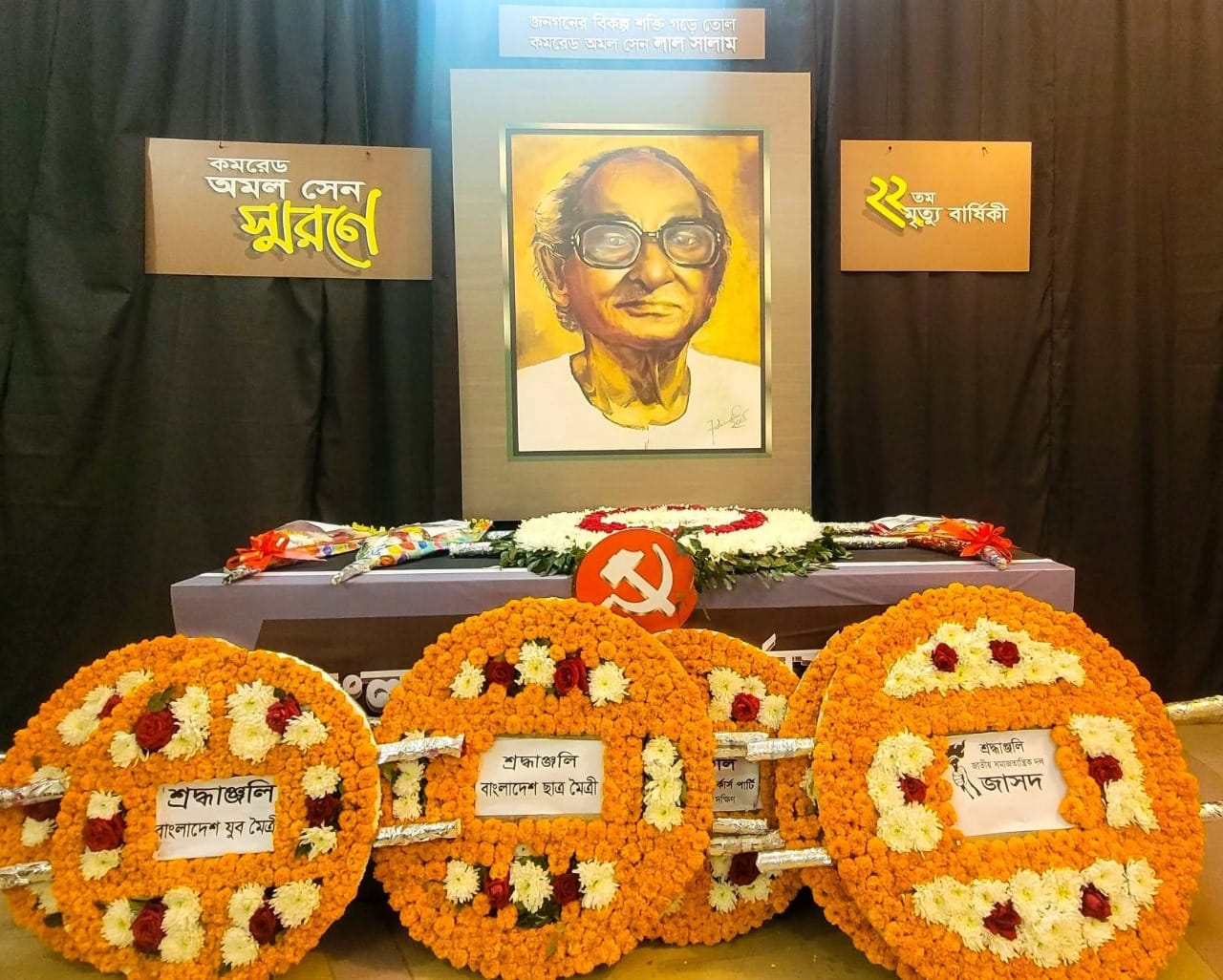
 Today, as the Workers’ Party of Bangladesh commemorates the 22nd death anniversary of Comrade Amal Sen, a pivotal figure in the communist movement of the Indian subcontinent, his legacy resonates not only in Bangladesh but also among revolutionary circles across South Asia, including Nepal. The struggles he championed—whether as a leader of the historic Tebhaga movement or as the founding president of the Workers’ Party of Bangladesh—offer valuable lessons for Nepalese leftists engaged in similar battles against feudalism, imperialism, and class oppression.
A Revolutionary from Humble Beginnings
Born in 1914 in the small village of Afra in present-day Narail district, British India, Amal Sen’s journey as a revolutionary began early. As a ninth-grader, he joined the anti-British imperialist struggle, associating with the Anushilan Samiti, a group committed to armed resistance. His student years at B.L. College in Khulna saw him align with the undivided Communist Party, where he led a peasant movement against the exploitative zamindari system, challenging even his father’s landholdings. This principled stand highlighted his unwavering commitment to justice, a quality that resonates with the struggles of Nepalese communists who continue to fight remnants of feudalism in their own country.
The Tebhaga Movement and Its Parallels
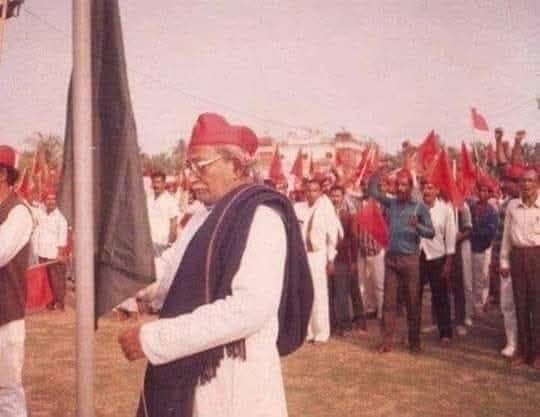
Comrade Amal Sen’s leadership in the Tebhaga movement of 1946 cemented his place in history. This grassroots struggle demanded two-thirds of the harvest for the peasants, challenging the exploitative landlords who thrived under colonial policies. In Nepal, the legacy of Tebhaga mirrors the efforts of land reform movements aimed at dismantling similar exploitative systems. Amal Sen’s role in mobilizing the oppressed and resisting both British and later Pakistani imperialism serves as a guide for organizing resistance in Nepal against entrenched inequalities and neo-colonial influences.
A Revolutionary Who Paid the Price
After the partition of India, Amal Sen faced relentless persecution under the Pakistani regime. Arrested multiple times and imprisoned for years, his resolve only strengthened. His life mirrors the sacrifices made by Nepalese communists during the Panchayat era and the People’s War, where activists faced imprisonment, exile, and death for challenging authoritarian regimes. His experiences underline the necessity of resilience in the face of state repression, a lesson still relevant for Nepal’s leftist movements.
Bridging Borders in Revolutionary Unity
During his exile in India following his release in 1971, Amal Sen issued an “Open Letter” calling for unity among leftists to support the independence of Bangladesh and the broader cause of socialism. For Nepalese communists, his efforts to build unity among fragmented factions of the left are a powerful reminder of the importance of ideological clarity and organizational solidarity. The factionalism that often hampers progressive movements in Nepal could benefit greatly from studying his attempts to create the Leninist Communist Party, which later evolved into the Workers’ Party of Bangladesh.
Ideological Contributions: Lessons for Nepal
Comrade Amal Sen was not just a leader of movements but also a thinker who sought to provide ideological clarity to the global socialist struggle. His essay “Problems of the World Socialist Movement” remains relevant in analyzing the challenges faced by communist movements after the fall of the Soviet Union. Similarly, his “Communist Life and Behavioral Guidelines” underscores the need for discipline and ethical conduct among revolutionaries—an aspect often overlooked in today’s leftist circles. These contributions could guide Nepalese communists in navigating ideological debates and maintaining the integrity of their movements.
Remembering a Selfless Revolutionary
Comrade Amal Sen’s decision to remain unmarried and dedicate his life entirely to the revolutionary cause is a testament to his selflessness. In Nepal, where revolutionary leaders often struggle to balance personal and political lives, his example serves as an inspiration to prioritize the collective good over individual gain.
Tribute from the Left
On January 16, tributes were paid to Comrade Amal Sen in Dhaka, with leaders from various leftist and progressive organizations gathering to honor his memory. Such commemorations remind Nepalese leftists of the importance of preserving the legacy of their own leaders, such as Madan Bhandari and Pushpa Lal Shrestha, and using these anniversaries to strengthen the revolutionary spirit.
Relevance to Nepal
In a region where the specter of imperialism still looms, where neoliberal policies exacerbate inequality, and where leftist movements often face internal discord, the life and work of Comrade Amal Sen hold profound relevance. His strategies in uniting the working class, resisting rightist and leftist deviations, and maintaining ideological rigor are lessons that Nepal’s communists must heed as they navigate contemporary political challenges.
As we reflect on the 22nd death anniversary of Comrade Amal Sen, his life serves not only as a reminder of the sacrifices required for social change but also as a beacon guiding the path toward a just and equitable society. The revolutionary movements of Nepal, like those of Bangladesh, must draw strength from his enduring legacy to continue the struggle for a world free of exploitation and oppression.