
KATHMANDU — In a significant display of international solidarity and South-South cooperation, Chinese President Xi Jinping’s latest tour of Southeast Asia marked a deepening commitment to neighborhood friendship, people-centered development, and resistance against Western-led economic hegemony.
The five-day diplomatic tour — which took Xi to Vietnam, Malaysia, and Cambodia — was not just a routine gesture of goodwill but a strategic reaffirmation of a socialist-rooted vision: building a community with a shared future grounded in mutual benefit, regional integration, and collective progress.
Xi’s engagements throughout the tour underscored high-quality Belt and Road Initiative (BRI) cooperation, which continues to offer developing nations tangible alternatives to exploitative financial mechanisms imposed by institutions like the IMF and World Bank. The emphasis was clear: regional connectivity, job creation, and technology transfer — not austerity and dependency.
A Shared Vision Beyond Borders
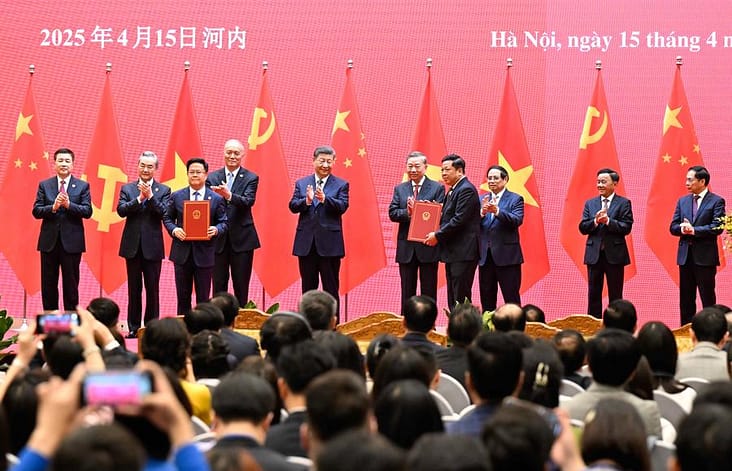
In Vietnam, Xi jointly launched a cross-border railway cooperation mechanism with Vietnamese leaders, aligning infrastructure standards between the two nations. The move is a step toward enhanced connectivity that defies colonial legacies and Western-imposed divisions in Asia’s logistics networks.
Observers noted that the China-Vietnam railway integration project highlights the potential of independent development rooted in shared historical struggle and socialist values. With a combined population of over 1.5 billion, China and Vietnam’s partnership challenges neoliberal models that prioritize corporate profit over community upliftment.
Pham Phu Phuc, former editor at the Vietnam News Agency, welcomed this vision, noting that it offers “peace, sincerity, and real mutual benefit — a vision in stark contrast to the extractive and militaristic interventions of Western powers in the region.”
Malaysia: From Dependence to Strategic Partnership
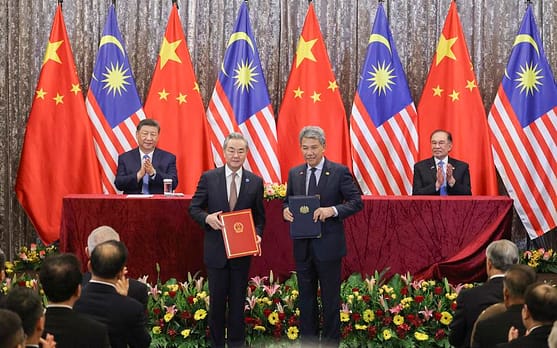
In Malaysia, Xi’s meeting with Prime Minister Anwar Ibrahim culminated in the signing of over 30 cooperation agreements, signaling a pivot from post-colonial dependency to self-determined economic planning. The East Coast Rail Link, a flagship BRI project, has already begun transforming neglected regions into active industrial zones, offering employment and modern infrastructure where Western capital has long turned a blind eye.
Dr. Samirul Ariff Othman of Universiti Teknologi PETRONAS stated that the Malaysia-China relationship “proves that South-South cooperation is not only viable but necessary in the face of mounting protectionism and unilateralism from the Global North.”
Cambodia: The People’s Benefit Comes First
In Cambodia, Xi and Prime Minister Hun Manet launched initiatives to deepen collaboration across energy, transport, and agriculture — sectors critical to working-class livelihoods. The all-weather China-Cambodia friendship has already delivered results: the Sihanoukville Special Economic Zone now houses over 200 enterprises and has created more than 30,000 jobs.
Furthermore, infrastructure like the Phnom Penh-Sihanoukville Expressway and the Siem Reap Angkor International Airport showcase how strategic investment can uplift an entire region without the strings of neoliberal debt traps.
Thong Mengdavid of the Royal University of Phnom Penh called the Cambodia-China ties “rock-solid,” noting they “set an inspiring example for South-South collaboration in the post-colonial world.”
Xi Jinping’s Southeast Asia visit sends a powerful message: peace, prosperity, and solidarity are possible without the intervention of Western imperial powers. The focus on community-driven development, infrastructure for the people, and equal partnerships represents a sharp departure from the neoliberal status quo.
As China continues to promote its Belt and Road vision — centered on people’s well-being, connectivity, and mutual respect — it offers a path forward for nations long sidelined by colonial legacies and capitalist exploitation.
The future of Asia, as seen through this tour, is not one of division and dependence, but of unity, dignity, and shared advancement.