
— On the 80th anniversary of liberation from Nazi-fascism, communities across Italy took to the streets, not just to honor the past, but to confront urgent threats to democracy and peace in the present. As right-wing forces led by Giorgia Meloni’s government seek to distort or erase the legacy of the Resistance, grassroots organizations have reaffirmed the need to defend the values that partisans fought for — freedom, equality, and a future without oppression.
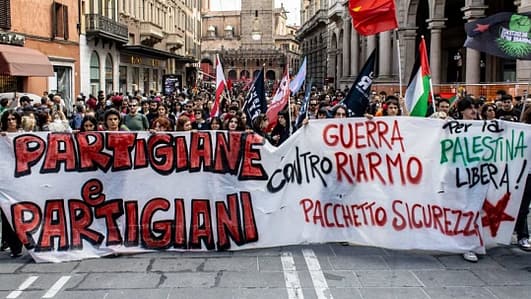
This year’s April 25 — Liberation Day — was marked by dozens of rallies and gatherings nationwide. Yet, rather than offering the usual formalities and scripted speeches, these events crackled with a renewed sense of purpose. Groups like Potere al Popolo and the Unione Sindacale di Base (USB) called on people to see the Resistance not as a closed chapter of history, but as an ongoing struggle against militarism, exploitation, and injustice.
“Eighty years ago, our grandparents freed us from the grip of fascism,” said Giuliano Granato of Potere al Popolo during a demonstration in Naples. “But remembering is not enough if we let history be reduced to museum pieces, stripped of the revolutionary spirit that made liberation possible.”
Confronting Genocide in Our Time
Central to this year’s mobilizations was a strong denunciation of Italy’s political and economic ties to Israel, amid its brutal assault on Gaza. Many activists pointed out the glaring contradiction between paying lip service to anti-fascism while supporting policies that enable modern-day atrocities.
In Genoa, Potere al Popolo unfurled a banner reading: “Mattarella, antifascists don’t finance wars and genocide”, aimed squarely at President Sergio Mattarella. Critics accused him of honoring Resistance fighters while maintaining silence on the mass suffering in Palestine — a silence that echoes complicity.
“To honor the Resistance while cozying up to a government committing genocide is to mock the very memory of those who fought against such horrors,” said a statement from Potere al Popolo Genoa.
For many, true remembrance means standing with the oppressed wherever they may be — understanding that the spirit of the partisans lives on in every act of solidarity against brutality and domination.
Saying No to the New Arms Race 
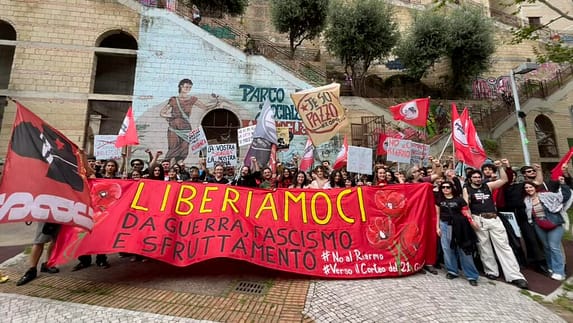
Another major target of protest was the skyrocketing investment in militarization under Meloni’s government and across the European Union. Leaders have justified a new arms race under the banner of “defense,” but grassroots groups see it for what it is: a massive transfer of wealth from ordinary people to arms manufacturers, all while public services crumble and climate catastrophe worsens.
“The rearmament plan launched by the EU represents the latest folly of a political class divorced from the needs of real people,” warned the USB in a public statement.
Potere al Popolo emphasized that the real crises of our time — inequality, healthcare collapse, environmental destruction — cannot be addressed with more tanks and missiles. “We don’t need more weapons,” activists declared. “We need investments in healthcare, education, wages, and a radical ecological transition.”
The resistance spirit of today demands building a society where people come before profits, where peace is more than just a word, and where international solidarity shapes foreign policy.
Defending the Meaning of Liberation
The Meloni government’s attempts to downplay the role of the antifascist Resistance — and to sanitize Italy’s fascist past — were not lost on protesters. The government’s five-day national mourning period for Pope Francis, conveniently overlapping with Liberation Day, was widely seen as an attempt to suppress celebrations and recast the day’s significance.
Local right-wing administrations seized the opportunity to cancel events and minimize commemorations. Meanwhile, far-right media ran provocative headlines like “April 25: Day of Mourning.”
“This is no accident,” said Granato. “For them, April 25 has always been a defeat. They’ve been waiting decades for a chance to undermine it.”
But progressive forces stood their ground. They honored not just the memory of the partisans, but their revolutionary vision — a vision of a society built on freedom, justice, and collective dignity. They made clear that resisting historical revisionism is part of resisting new forms of oppression rising today. 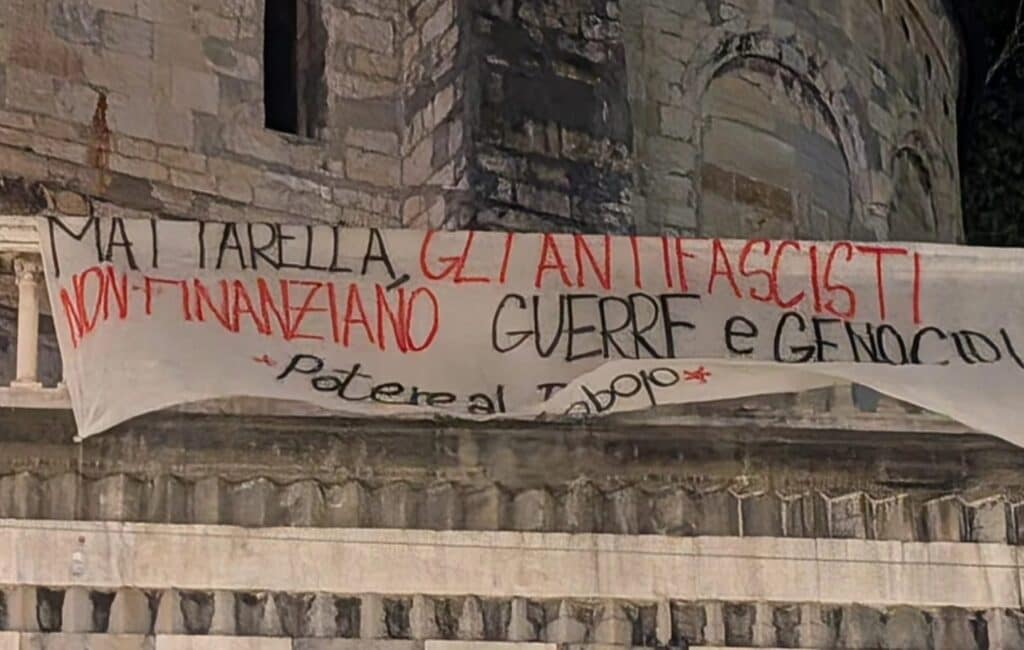
“Defeating fascism in the 1940s was only the beginning,” Granato explained. “Today, we must defeat its modern forms — militarism, genocide, authoritarianism, and the theft of hope from working people.”
Building a New Resistance
Protesters in Naples, Bologna, Rome, and beyond didn’t let the day end at formal ceremonies. Plans are already underway for a national assembly in Rome on May 24 and a mass mobilization on June 21, just ahead of the NATO summit in The Hague.
These efforts aim to unite movements across Europe in a common struggle — not just against war and imperialism abroad, but against the suffocation of democracy and social justice at home.
As the world edges dangerously toward more conflict and division, the Italian Resistance offers more than nostalgia. It offers a roadmap: a reminder that liberation is never handed down from above, but must always be fought for, together.