How Systemic Inequalities Make One Girl’s 4.0 GPA a Revolutionary Act
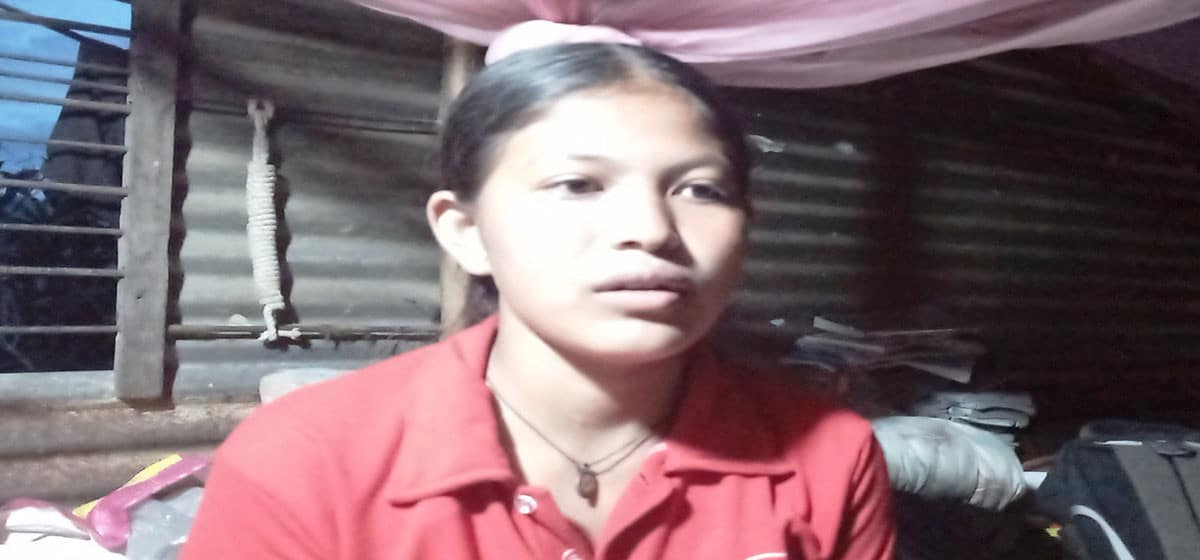
BHAKTAPUR, June 30, 2025 — In the sweltering heat of a brick kiln in Changunarayan Municipality, where the air shimmers with dust and the smell of dried clay, sixteen-year-old Goma Shrestha represents something powerful: the unyielding determination of Nepal’s working class to break free from the cycles that have trapped generations before them.
When the SEE Results 2081 were announced last Friday, Goma was returning from the fields where she had been helping with rice planting — another layer of labor that fills the spaces between her studies and her family’s brick-making work. The news that she had achieved a perfect 4.0 GPA didn’t just celebrate individual achievement; it illuminated the profound inequities that make such success extraordinary rather than ordinary.
Goma’s journey began in Khaniyapani, a remote village in Ramechhap district where access to quality education is limited, particularly in rural and marginalized communities. The one-hour downhill trek to reach the nearest school in Besi wasn’t just a commute — it was a daily reminder of how geography becomes destiny for many of Nepal’s children.
When her father, Meen Bahadur Shrestha, made the wrenching decision to leave their ancestral land four years ago, it wasn’t driven by wanderlust or opportunity. It was driven by necessity. “The main reason for moving from Ramechhap’s Khaniyapani to Bhaktapur was our daughter’s education,” he explained, his words carrying the weight of a choice no parent should have to make: abandoning one’s roots to secure a child’s future.
This migration story echoes across Nepal’s brick industry, where only 22% of total workers are originally from the same district as where the kiln is located; 32% of the workers come from other districts of Nepal. The Shrestha family became part of this vast movement of internal displacement, driven not by choice but by the systematic neglect of rural areas that forces families to seek survival elsewhere.
The Hidden Violence of Child Labor
What happened next reveals the brutal mathematics of poverty in Nepal. While Goma attended Mahendra Gram Secondary School during the day, her mornings and evenings were consumed by the physically demanding work of turning and drying bricks under the scorching sun. This wasn’t a character-building exercise — it was economic necessity in a country where approximately 250,000 people are thought to work annually in kilns throughout Nepal, of that as many as 60,000 are children.
The brick industry’s dependence on child labor isn’t an accident; it’s a feature of an economic system that extracts maximum value from the most vulnerable. Over 175,000 workers, of whom as many as 60,000 are children, labour in unhealthy and unsafe conditions in Nepal’s brick kilns, often trapped in cycles of debt bondage that span generations.
For Goma, this meant growing up in a tin-roofed shed, playing in courtyards filled with unbaked bricks, her childhood measured not in games and rest but in the rhythm of industrial production. Her education became an act of resistance against a system designed to transform children into productive units rather than nurture their intellectual development.
The Class Divide in Education
Goma’s achievement becomes even more remarkable when viewed against Nepal’s educational landscape, where circumstances, such as wealth, gender, ethnicity and location, over which people have little control but which play an important role in shaping their opportunities for education and life.
She didn’t attend a prestigious private school with small class sizes and abundant resources. She studied at a community school while working in conditions that would be considered hazardous for adults. Her success exposes the myth that educational outcomes are simply a matter of individual merit, revealing instead how structural inequalities create vastly different starting points for children based on their family’s economic status.
The fact that she emerged as one of Bhaktapur’s top 30 students and achieved the highest score in her municipality isn’t just a personal triumph — it’s an indictment of a system that forces exceptional individuals to overcome extraordinary barriers while their privileged peers face no such obstacles.
The Price of Dreams
Goma’s aspiration to become a doctor carries profound implications beyond personal ambition. In a healthcare system that often fails to serve rural communities like the one her family left behind, her dream represents the possibility of knowledge and skill returning to serve those who have been systematically underserved.
But even this dream is constrained by economic reality. “My goal is to study Science stream in Plus Two and then get a scholarship to study MBBS at any medical college in Nepal,” she stated, each word carrying the understanding that talent alone isn’t enough — that she must excel beyond her peers not because she’s more capable, but because she cannot afford to be anything less than extraordinary.
This scholarship requirement isn’t just about financial aid; it’s about a system that rations opportunity based on economic capacity. While wealthy families can purchase medical education, working-class students must prove themselves worthy of what should be a basic right.
Beyond Individual Success
While Nepal has made remarkable progress in reducing extreme poverty from 55 percent in 1995 to just 0.37 percent in 2023, Goma’s story reveals that statistical progress doesn’t automatically translate to equal opportunity. The persistence of child labor in industries like brick-making demonstrates that economic vulnerability continues to shape children’s life trajectories in fundamental ways.
Her success challenges the narrative that poverty is a result of individual failings. Instead, it highlights how structural barriers — from geographic isolation to economic necessity — systematically limit opportunities for entire communities. When a child must work in hazardous conditions to support her family while simultaneously pursuing education, the real question isn’t why more don’t succeed, but how anyone manages to break through at all.
The Politics of Education
Goma’s achievement occurs within a broader context where brick kilns employ thousands of families annually for the seasonal work, and as families migrate between work in brick factories and agricultural work at home, more factors block their children from a complete and quality education. Her success is exceptional precisely because the system isn’t designed to produce such outcomes from her demographic.
The celebration of her individual achievement, while deserved, shouldn’t obscure the thousands of equally talented children whose potential is being squandered by preventable circumstances. For every Goma Shrestha who breaks through, countless others remain trapped by the same structural barriers she overcame through exceptional effort and some degree of fortune.
A Different Kind of Revolution
In a tin-roofed shed in Bhaktapur, surrounded by stacks of drying bricks and the constant hum of industrial production, a quiet revolution is taking place. It’s not the revolution of the barricades or the mass movements, but the revolution of a working-class family refusing to accept that their daughter’s dreams should be constrained by her circumstances.
Goma Shrestha’s 4.0 GPA represents more than academic excellence — it represents the radical possibility that talent and determination can overcome systemic disadvantage. Her story doesn’t just inspire; it demands that we examine why such extraordinary effort should be necessary for basic educational success.
As she prepares for the challenges ahead, knowing that her path to becoming a doctor will require navigating systems designed to favor those with economic privilege, Goma carries with her the hopes of a community that understands education not as individual advancement but as collective liberation.
In the sweltering heat of the brick kiln, where childhood is measured in units of production and dreams are luxuries few can afford, one girl’s perfect grades become a perfect metaphor for the transformative power of education — and a powerful indictment of the barriers that prevent most from accessing it.
Her achievement lights a path forward, but it also illuminates how far we still have to travel toward a world where every child’s potential can flourish, regardless of the circumstances into which they were born.