
Belém do Pará, Brazil – 13 November 2025
With songs, shared meals, and the red flags of struggle fluttering in the humid Amazonian air, a diverse international delegation of La Vía Campesina — representing peasants and small farmers from the United States, El Salvador, Puerto Rico, Cuba, Haiti, Uruguay, Chile, Peru, Brazil, France, the Netherlands, Denmark, the United Kingdom, Niger, Nigeria, the Democratic Republic of the Congo, Zimbabwe, Nepal, Thailand, Tunisia, and Morocco — visited the Abril Vermelho encampment of Brazil’s Movimento dos Trabalhadores Rurais Sem Terra (MST) in Belém, Pará. The visit, infused with solidarity and purpose, formed part of collective preparations for COP30 and the upcoming Peoples’ Summit in Belém — not as a side event, but as a living expression of the struggles that make climate justice a reality.
The gathering was not a mere field trip. It was a meeting between movements that have turned resistance into daily practice — farmers who have fought eviction and hunger with the same hands that now sow food and dignity. The Abril Vermelho camp, once the site of a vast monoculture plantation of African oil palm managed by the corporation Dempasa, now stands as proof of what organized communities can reclaim from the ashes of agribusiness failure. When the plantation collapsed in the 1990s after the deadly amarilleo fatal disease wiped out its palms and Dempasa went bankrupt in 2000, the land lay abandoned. By 2003, MST families had begun to camp nearby, and a year later, they occupied the unproductive estate — transforming what was once a corporate ruin into a living community.
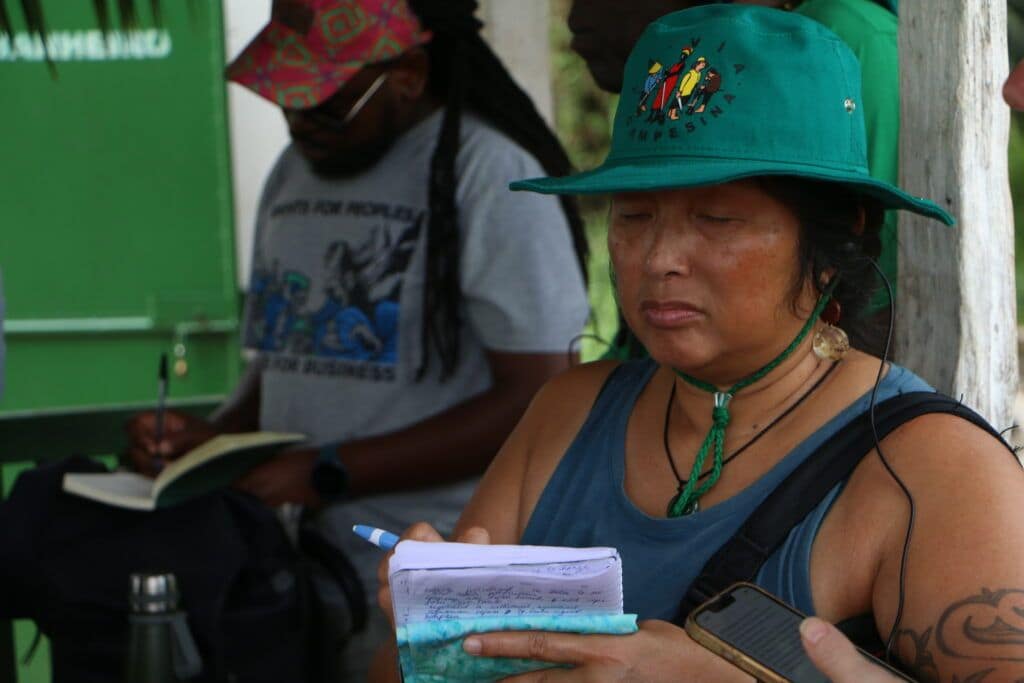
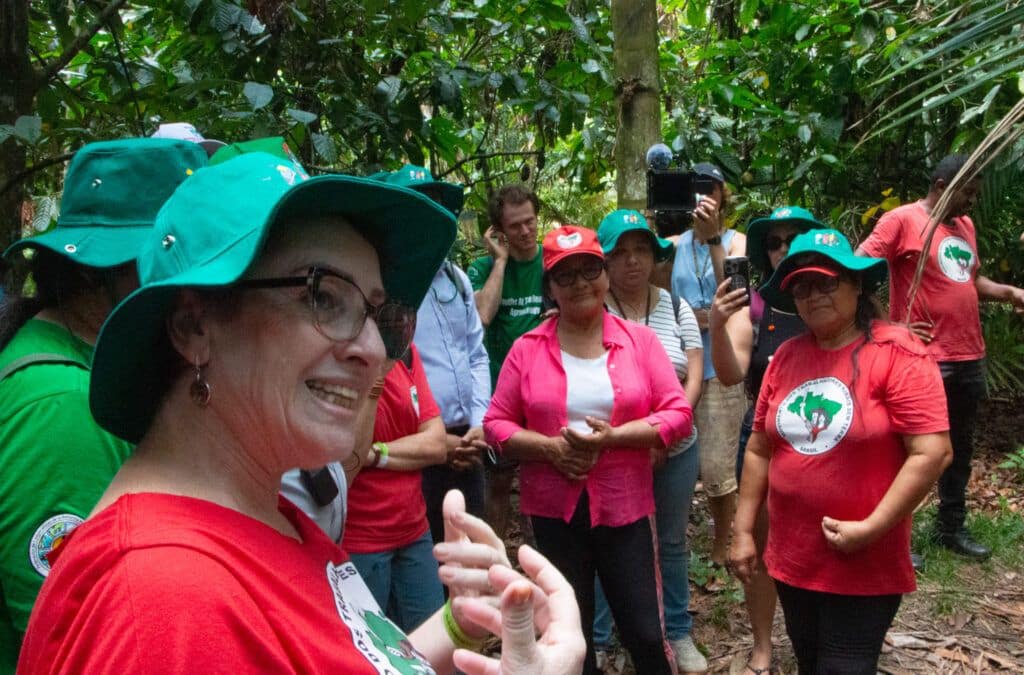
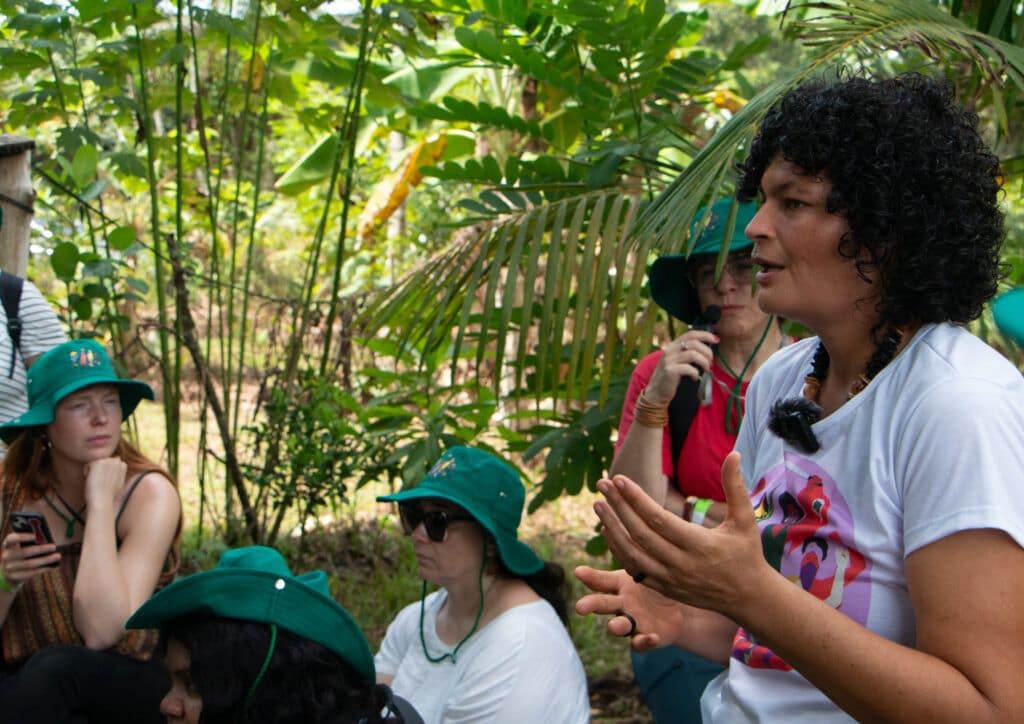
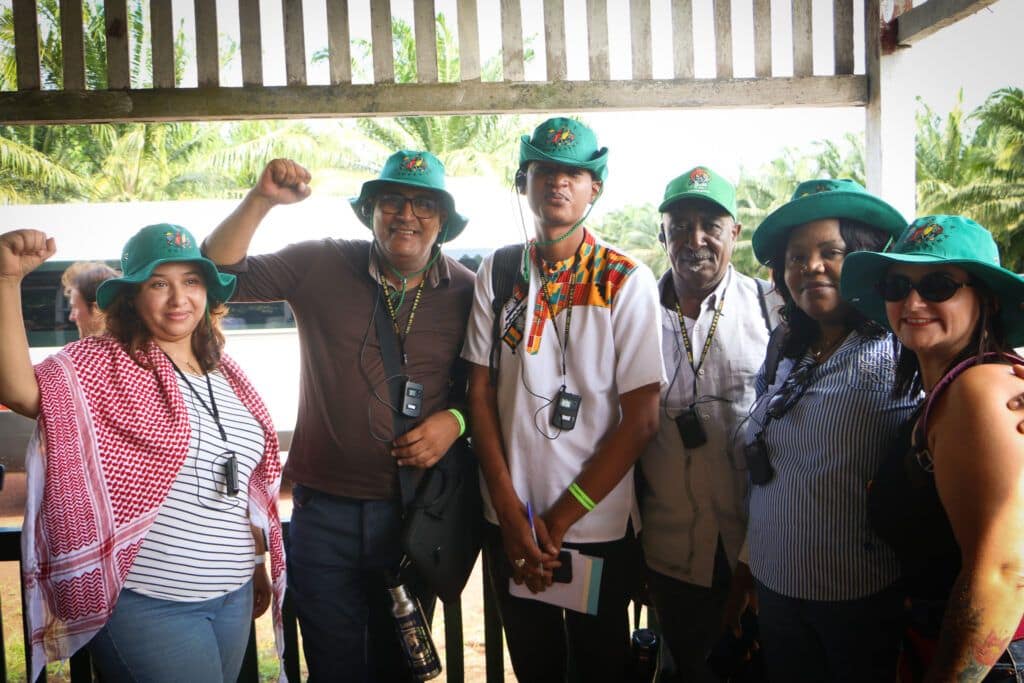
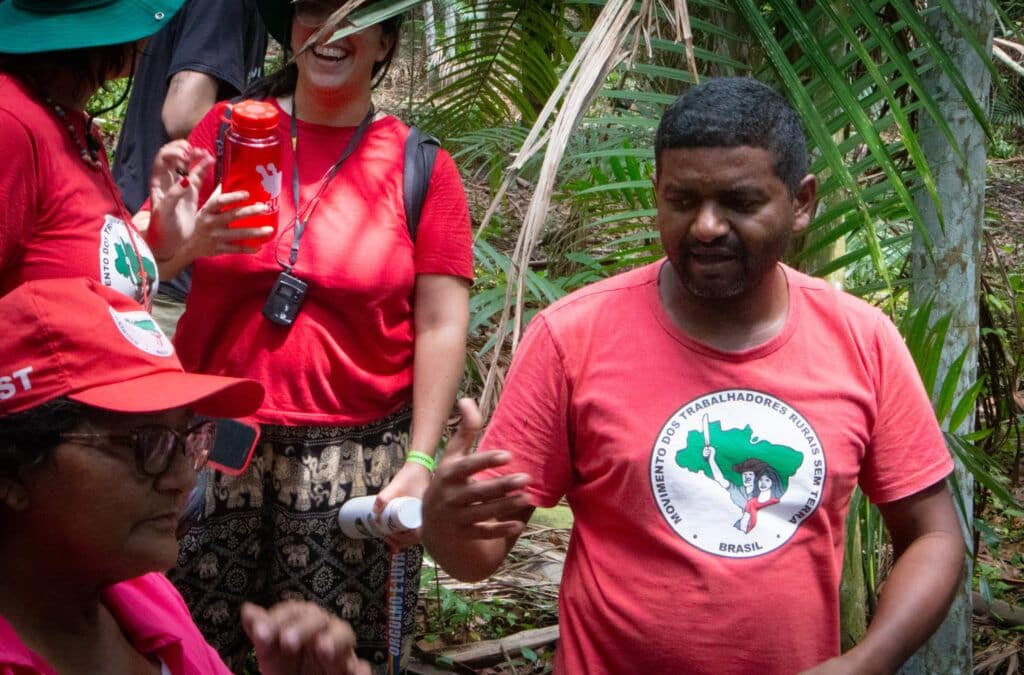
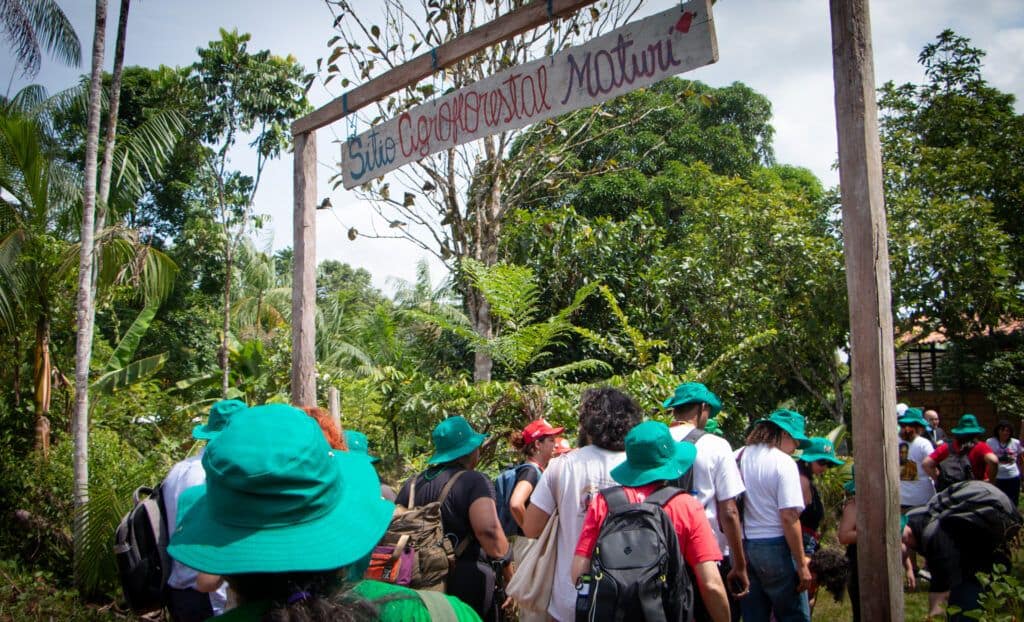
“When we arrived, there was nothing,” recalls resident Doña Rai, who settled there in 2004. “Everything you see today was grown by the families themselves.” Around 100 families now live on land once monopolized by a single company, cultivating it collectively as a space of life and resistance.
The settlement’s heart beats through agroecology — a system that heals the soil and restores dignity. Families have rejected chemical agriculture, choosing instead syntropic farming and agroforestry systems that mirror the logic of nature. At Sítio Agroflorestal Maturi, Jéssica and her family have spent three years regenerating the soil using nothing but organic matter and patience. Today, their fields teem with life — roots stretching two meters deep, earthworms and termites crawling through renewed earth. Professor Daniel of the Federal Rural University of the Amazon, who studied the soil, called it “a textbook example of regeneration without chemicals.”
Alongside food, the families cultivate bees — native meliponas like the Uruçul M90 and marmelada species — producing honey and propolis while protecting biodiversity. And the transformation extends to their homes: Jéssica’s family is building a bioconstruction house from recycled PET bottles and earth, a model of sustainable living that offers cooler, healthier interiors than concrete.
This is agroecology as a philosophy — one that feeds, shelters, and resists. In Doña Rai’s plot, the abundance is evident: açaí, cacao, cupuaçu, pupunha, maize, cassava, banana, abacaba, and Pará nuts flourish together. Surplus harvests are sold in local, university, and regional fairs organized by the MST, generating income that sustains their cooperative economy.
Yet the struggle is not over. The community still awaits a tractor — requested two decades ago — to ease collective work. As Doña Neta, another farmer, told the delegation, “We need a friendly shoulder in this struggle.” The camp’s structure, organized in nuclei of 8–10 families each, embodies MST’s principle of collective power: democracy rooted in the soil.
For the visiting La Vía Campesina delegates, this was more than an exchange — it was a reaffirmation that climate justice and food sovereignty are inseparable. The MST’s initiative Caminhos da Agroecologia na Reforma Agrária Popular (“Paths of Agroecology in Popular Agrarian Reform”) invites the world to witness how degraded, poisoned lands can become spaces of life again through collective work and ecological wisdom.
As COP30 and the Peoples’ Summit approach, the voices rising from Belém remind the world that the solutions to the climate crisis are not to be found in corporate boardrooms or carbon markets, but in the hands of those who till the earth. The MST and La Vía Campesina show that true transformation begins from below — where land, labor, and life are bound together in defiance of capital’s logic.
In the end, the delegation’s visit underscored a truth long known to those who live from the land: agroecology is not simply a method of cultivation — it is a political act, a declaration that the earth belongs to those who nurture it. The right to land, food, and dignity is not a policy demand; it is a human one — and in Belém, amid red flags and fertile soil, that truth continues to grow.