
As the war in Sudan nears a thousand days, unleashing the world’s worst humanitarian crisis, the language of diplomacy fills the air. World leaders speak of truces and immediate goals. Yet, for the millions of Sudanese facing famine, disease, and death, these words ring hollow against the deafening reality: their suffering is not an accident, but the outcome of a system built over generations.
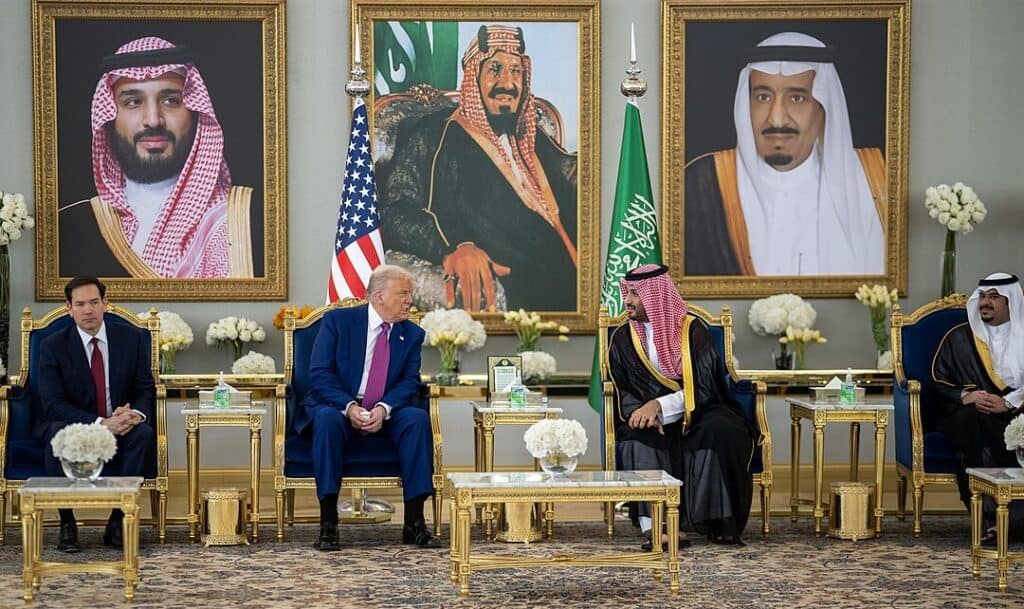
The recent statements from global powers reveal a staggering disconnect. One major world leader recently admitted that until a wealthy foreign crown prince explained it to him, Sudan “was not on my charts.” He described previously viewing the conflict as “just something that was crazy and out of control,” a “freelance” chaos with no root cause. This profound ignorance, expressed by a figure who now claims to be “the only leader… capable of resolving the Sudan crisis,” exposes a brutal truth. To the architects of global order, Sudan has only ever been visible as a piece on a geopolitical chessboard or a source of wealth, never as a nation of people with a right to sovereignty and peace.
This amnesia is convenient. It erases a long history of foreign interference. For over half a century, external powers have shaped Sudan’s destiny, not for the benefit of its people, but for strategic gain. During the Cold War, the United States sought to use Sudanese territory against a Soviet-leaning Egypt. For years, U.S. troops conducted desert warfare training in northern Sudan, preparing for conflicts in other lands. Later, the Sudanese regime would be labeled a state sponsor of terror, then welcomed as a “strong partner” in a different global war, its status fluctuating not with its human rights record, but with its utility to foreign policy objectives.
The pattern is clear: external engagement has consistently reinforced a destructive internal logic. For decades, a predatory elite was cultivated within Sudan. This was not a class that built factories, schools, or hospitals. It was a “comprador parasitic capitalist class,” a network of military conglomerates and trading cartels whose sole purpose was to act as the middleman between Sudan’s vast resources and the global market. They controlled the state not to develop it, but to strip it. The real economy—the farms, the local workshops—was left to wither, while this elite grew fat on extraction.
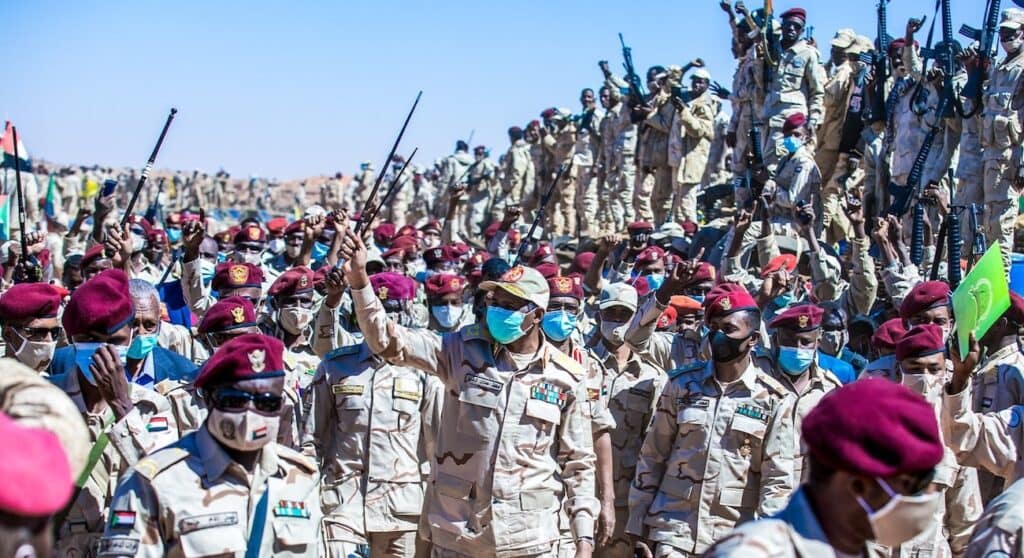
The current war is the bloody climax of this system. It is not a simple feud between two generals. It is a violent fracture within this very elite, with each wing backed by its own set of foreign patrons, fighting over who controls the tap through which Sudan’s wealth flows. The Rapid Support Forces (RSF), born from the Janjaweed militias of the Darfur genocide, finances its war through smuggled gold and regional sponsorships. The Sudanese Armed Forces (SAF) is entrenched in its own network of economic holdings. The war is their business, and the people are the cost.
The Theft of a Nation: Land, Ports, and the Silence of the Powerful
The backdrop to this conflict is a silent scramble for Sudan’s very body. Its fertile land, watered by the Nile, is some of the most coveted on the continent. Under policies prescribed by international financial institutions, vast tracts were handed over to foreign powers and corporations. Egypt acquired huge leases for agriculture not primarily to feed Sudanese, but for export crops to bolster its trade balance. The ambitions of Gulf nations dwarfed even this.
Saudi Arabia and the United Arab Emirates secured millions of acres on 99-year leases for a pittance. The UAE envisioned a colossal infrastructure project: a new Red Sea port connected by a 450-kilometer road to its vast Sudanese farmland, creating a seamless export corridor. This deal was signed even as United Nations agencies warned of a worsening hunger crisis within Sudan. The plan was not to feed the starving, but to more efficiently export the wealth from under their feet.
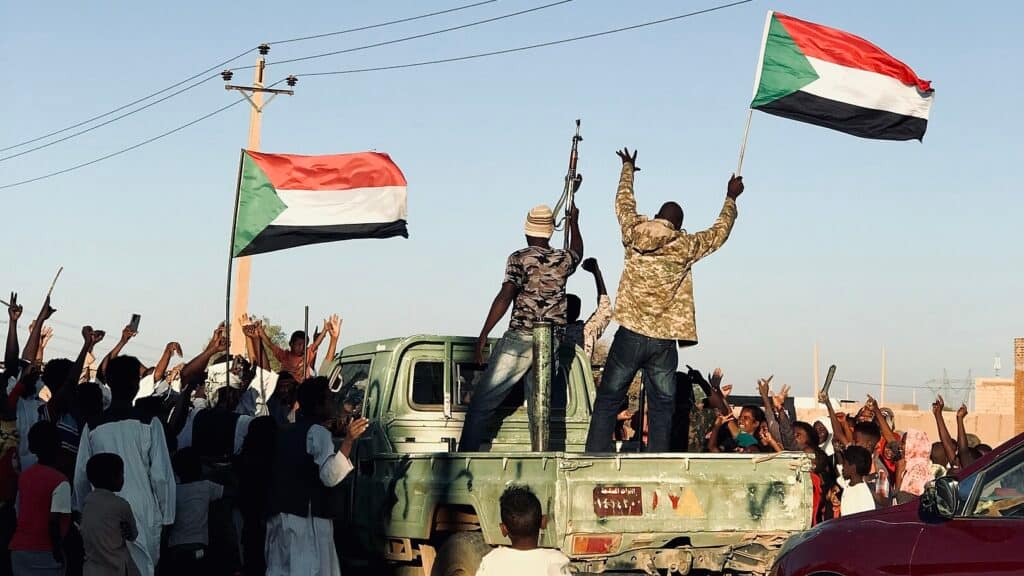
This looting was only paused by the courage of the Sudanese people. The December Revolution of 2018, sparked by the tripling of bread prices, was a profound rejection of this entire system. For months, a mass, pro-democracy movement occupied streets and squares, demanding not just a change of face, but a change of structure. They called for the dissolution of the parasitic militias, for the army to serve civilians, for an economy that served the people, and for a foreign policy aligned with Sudanese interests, not foreign axes.
The revolution’s heart was the sit-in outside the army headquarters—a symbol of popular will. Its end was a massacre, as the RSF was unleashed on the protesters, killing, raping, and dumping bodies in the Nile. This atrocity occurred shortly after the junta’s leaders visited Saudi Arabia, the UAE, and Egypt—powers whose lucrative deals had been threatened by the revolution’s demands. The message was clear.
Yet, the people persisted. They forced a compromise, but the revolutionary demands for radical economic change were too threatening. The civilian technocrats who shared power with the generals soon resumed talks to hand over ports and land. Only organized resistance from trade unions, the very backbone of the revolution, temporarily halted these plans.
The international response was not to support the people’s radical vision for peace, but to manage the crisis. The goal was stability for extraction, not justice for Sudanese. When the generals fell out and plunged the country into war in April 2023, it was the ultimate counter-revolution. The fierce public mobilization that could challenge the system was drowned out by the roar of artillery and the desperate struggle for survival.
A Peace Designed to Perpetuate War
Today, the so-called “peace process” led by a Quad of the US, Saudi Arabia, the UAE, and Egypt is viewed by many Sudanese not as a salvation, but as a continuation of the problem. These are the very powers with direct economic and geopolitical stakes in the outcome. They are not neutral arbiters, but invested parties. The negotiations are, in essence, about “how to divide the cake” and “sustain dependency,” ensuring a new government that will guarantee their access to resources and strategic advantage.
The war economy now enriches both warring factions through gold, minerals, and the control of trade routes. The horrific siege and massacre in El Fasher were carried out with weapons sourced from this global system. The famine stalking the land is not just a product of fighting, but of an economic model that for decades prioritized export crops over food sovereignty, and that now uses hunger as a weapon.
Any ceasefire that emerges from these talks will be fragile, designed to install a pliant civilian façade that legitimizes the continued control of the country by domestic elites and their foreign backers. It is an attempt to officially abort the December Revolution’s dream of a sovereign, just Sudan.
But the revolution is not dead. It lives in the Resistance Committees that now organize aid amidst the rubble. It lives in the unwavering understanding among the Sudanese people that their pain stems from a structure, not just from two men. A true ceasefire, however achieved, would open space not for a return to the old order, but for the people to once again mobilize. The path out of this hell cannot be drafted in New York or Riyadh. It can only be forged by the masses who have paid the price for this system in blood.
The future of Sudan will be decided by whether the world continues to see it as a site for resource grabs and proxy battles, or finally recognizes the right of its people to build a nation where the wealth of the land serves those who till it, where ports serve sovereignty instead of subjugation, and where peace means more than just a silence between wars. The choice is between perpetuating a system that creates endless crises, or finally standing with those who have, for so long, fought to break it.