
In a critical development, Ukrainian President Volodymyr Zelensky’s upcoming video conference with US senators is poised to be a pivotal moment in the ongoing Ukraine war. The Biden administration’s decision on providing an additional $60 billion in aid to Ukraine has become a decisive factor that could shape not only Zelensky’s political future but also impact the dynamics of the conflict.
Three key elements make this meeting significant. Firstly, the Biden administration is demonstrating a willingness to engage with Zelensky, indicating that he is not entirely written off. Secondly, there is a determination within the administration to maintain hope and not concede defeat in the conflict. Lastly, the United States is signaling to Europe that it remains committed to the region, dispelling concerns of an exit akin to Afghanistan.
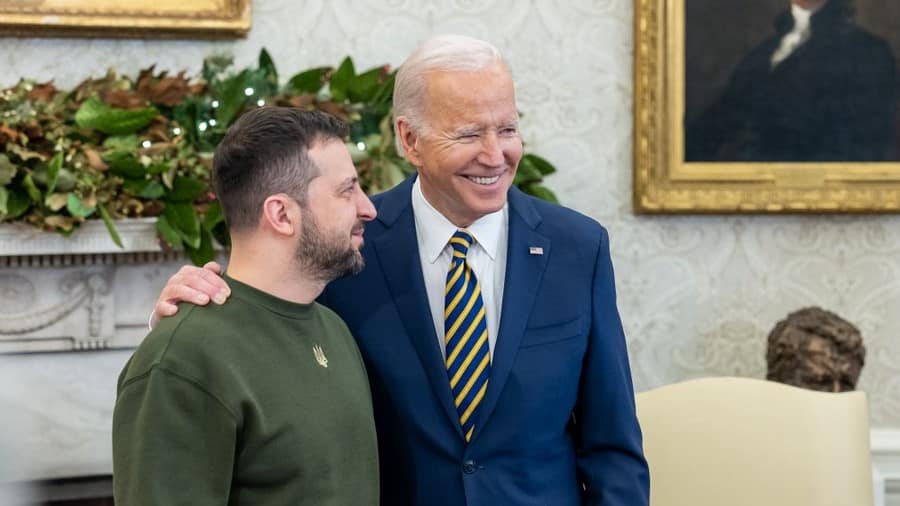
The classified briefing by Zelensky to the US Senate is a make-or-break effort by the Biden administration to convey the severe consequences of cutting off aid. The Senate’s decision could also have far-reaching implications for Biden’s chances of securing a second term in the 2024 election.
Shalanda Young, the director of the Office of Management and Budget, issued a stark warning to congressional leaders, emphasizing that without congressional action, the US would run out of resources for procuring weapons and equipment for Ukraine by the end of the year. Young stressed that the loss of US financial support could jeopardize Ukraine’s gains and increase the likelihood of Russian military victories, potentially leading to a broader regional conflict.
As the Biden administration fights to secure aid for Ukraine, questions arise about the efficacy of US money in bolstering Ukraine’s depleted manpower. The European Union, facing credibility challenges as an alternative source of support, is set to discuss continued assistance for Ukraine in an upcoming summit.
A significant hurdle at the summit is Hungary’s opposition, with Prime Minister Viktor Orban demanding a wholesale review of EU support for Kiev before considering Ukraine’s entry into the group and a key budget deal. Orban’s stance, coupled with growing Ukraine fatigue in some EU countries, poses a challenge for unified decision-making within the bloc.
Amid these geopolitical complexities, Ukraine faces internal challenges, including a power struggle between Zelensky and his top military commander Gen. Valery Zaluzhny. Zelensky’s popularity decline and reported disagreements with military commanders over tactics add uncertainty to the internal dynamics.
Simultaneously, recent revelations about secret peace talks between Gen. Zaluzhny and Gen. Valery Gerasimov, who oversees the war for the Kremlin, further complicate the situation. While the nature of these talks remains uncertain, they coincide with a power struggle within Ukraine.
A detailed analysis by the Washington Post on Ukraine’s failed “counteroffensive” sheds light on Zaluzhny’s rejection of Western military doctrine, potentially influencing the conflict’s outcome. As these developments unfold, Zelensky emerges as a critical figure, with the Biden administration likely viewing him as a strategic choice for stability through the challenging period leading up to 2024.