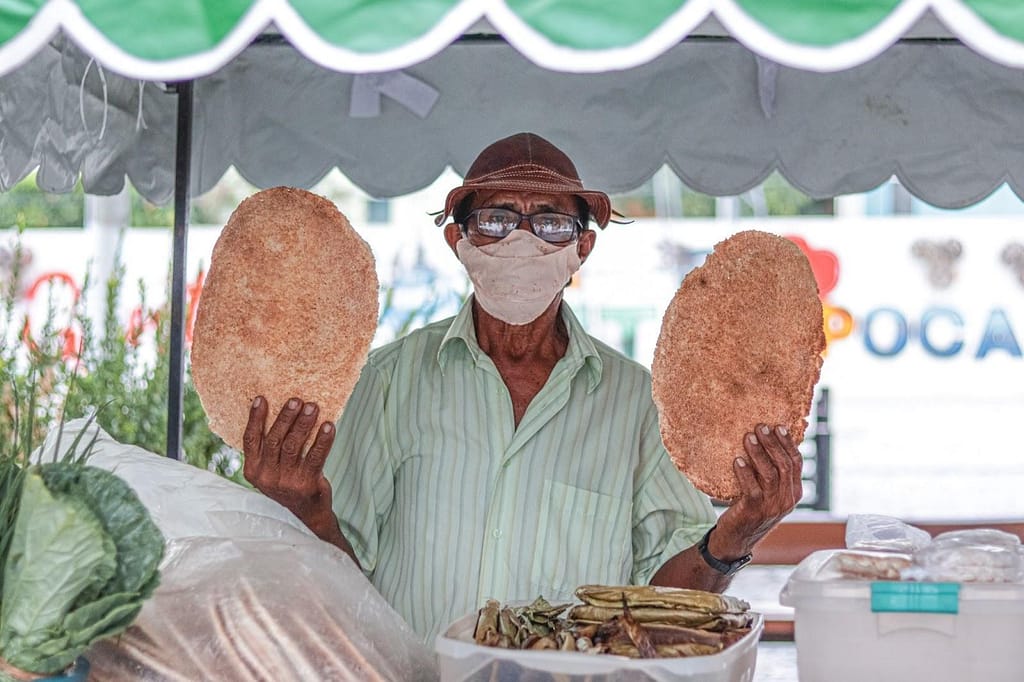
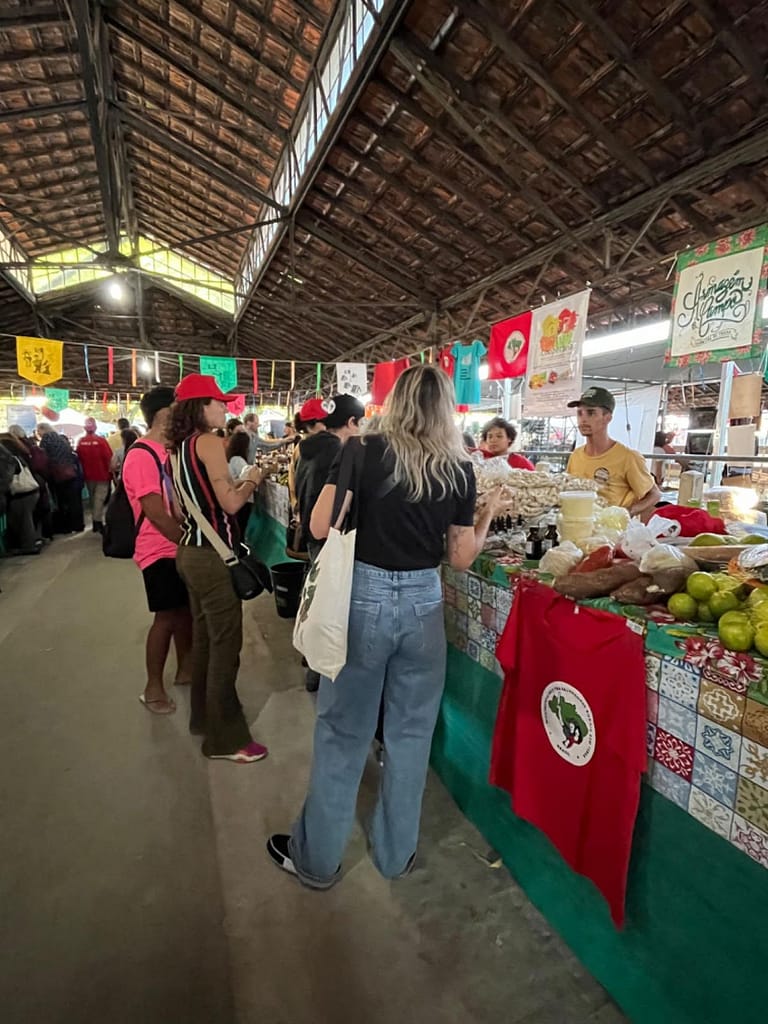
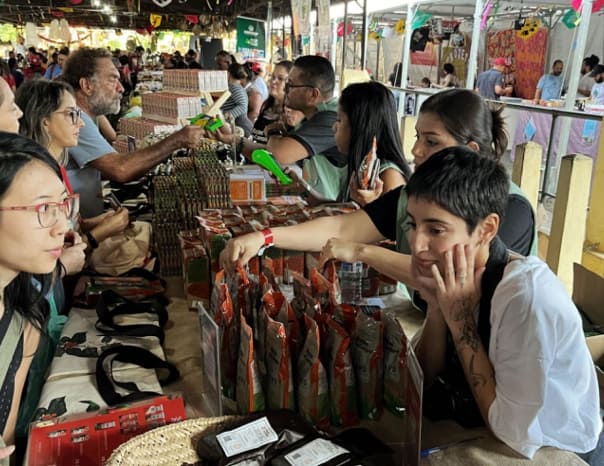
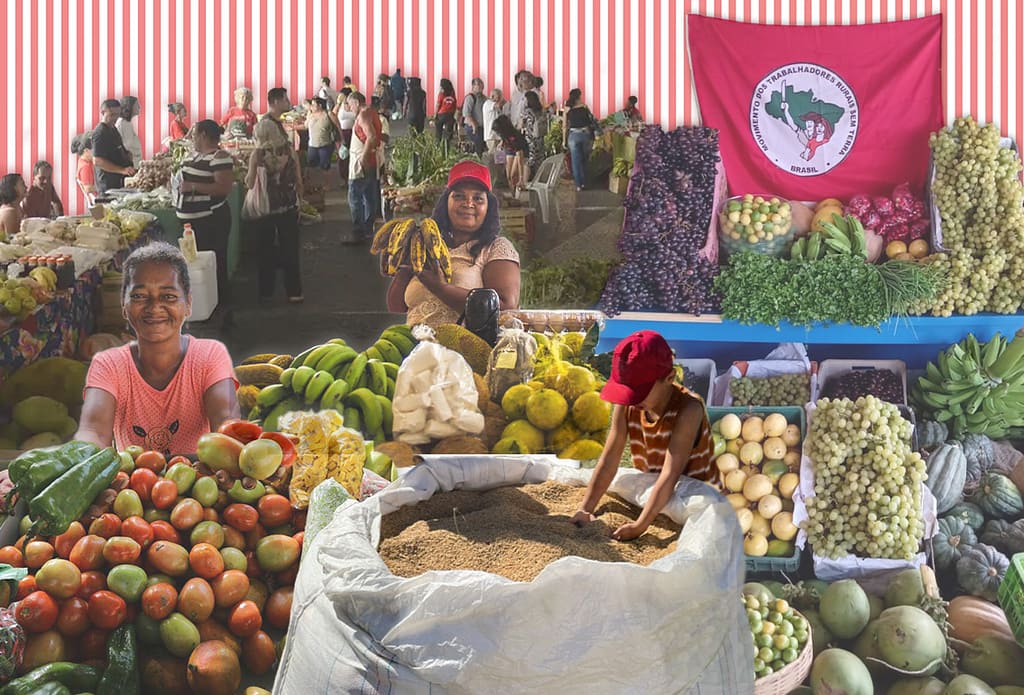
Online Peoples News – September 18, 2024, Despite being one of the largest food producers globally, Brazil faces a paradoxical challenge: more than 33 million Brazilians suffer from hunger, according to the 2022 “Look at Hunger” report. While food production is concentrated in the hands of large corporations driven by profit, a growing movement rooted in agroecology and solidarity economy principles is offering an alternative—agroecological fairs.
These fairs, part of broader territorial markets, provide a space where farming families can sell their produce directly to consumers at fair prices. Unlike conventional markets dominated by large companies, agroecological fairs promote collective values, mutual aid, and sustainability. They have also become a source of empowerment for women farmers, who traditionally worked alongside their husbands without financial independence.
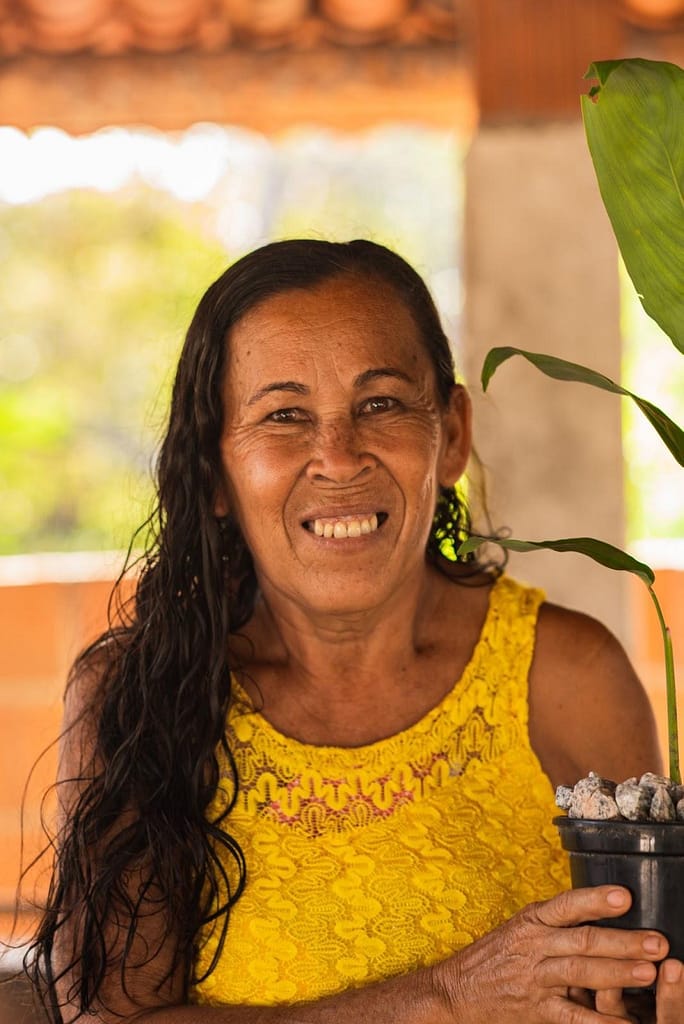
Maria de Fátima dos Santos, known as Fafá, an agroecological farmer from the Jenipapo community in Ceará, highlights the transformative impact these fairs have had on women’s lives. “We have a freedom we didn’t have before,” she explains. “Now, we have our own money and can buy what we want.”
The fairs have also helped farming families increase their income, with a survey revealing that in 2020, farmers’ earnings from these markets grew by 71%. The products sold are healthier, locally grown, and free from pesticides, providing a stark contrast to the often low-quality offerings of large supermarkets.
Agroecological fairs are not just about food—they are spaces of resistance against capitalist and sexist practices. They bring rural and urban communities closer together, fostering solidarity and the sharing of knowledge. “These fairs stimulate circular and solidarity economies, where the exchange of experiences between farmers and consumers is as important as the sale of food,” says Neila Santos, coordinator of CETRA, a labor studies organization.
However, sustaining and expanding these markets requires ongoing investment and supportive public policies. Advocates like Paulo Petersen, executive coordinator of AS-PTA, stress that institutional support is critical. “Public policies must promote new marketing circuits controlled by local actors,” he explains.
The agroecological movement is gaining strength across Brazil, but the road ahead remains challenging. Farmers like Fafá emphasize the need for more public support, as these fairs play a vital role in feeding the nation and promoting healthier, more equitable food systems.
As public demand for sustainable and locally sourced food grows, agroecological fairs could become a key tool in addressing Brazil’s hunger crisis while building a more just and inclusive economy.
Find an Agroecological Fair Near You
For those interested in supporting agroecological farmers and accessing healthier food options, resources such as CETRA and the Brazilian Institute for Consumer Defence (Idec) offer maps and listings of fairs across various states.
-Republished from Brasil de Fato. Translated by ROOTS.