
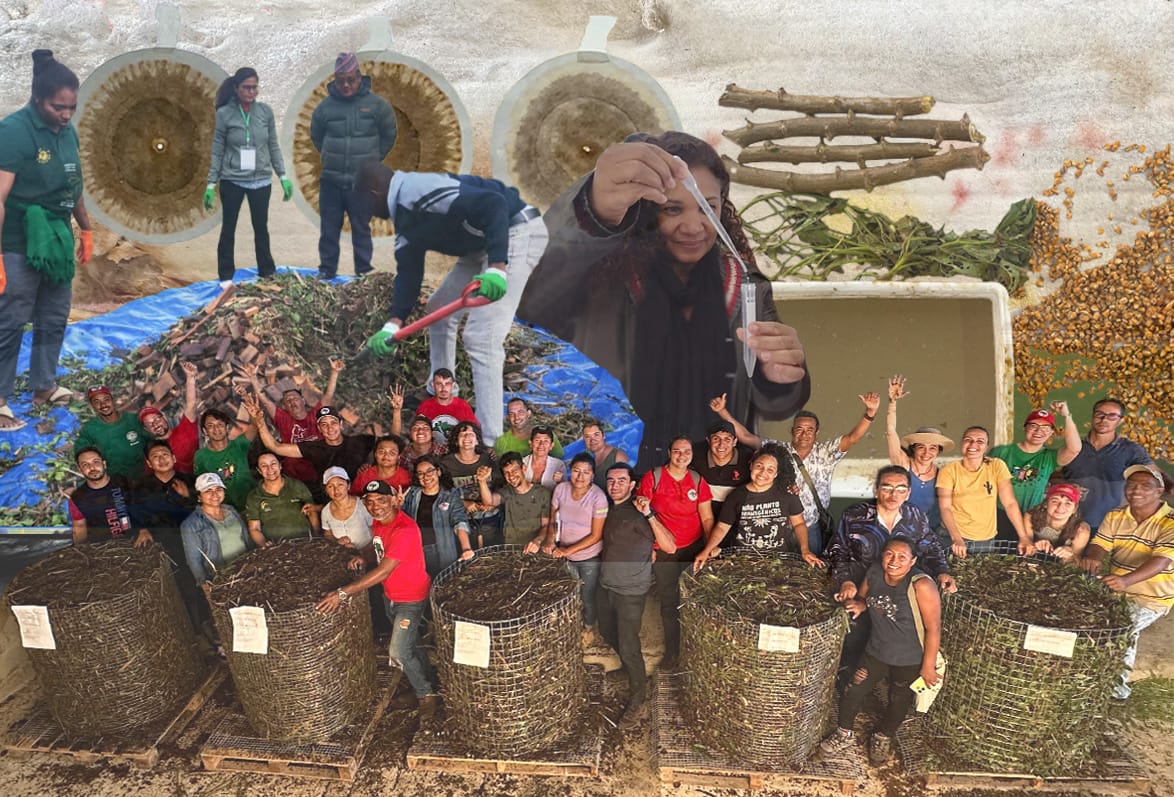
 Abya Yala is a term used by the Kuna, the people who live in the territory of the current States of Panama and Colombia, to refer to the American continent in its entirety prior to European colonization. In the Kuna language, “Yala” means land, territory, and “Abya” means mature mother; thus, the meaning of the term would be “land in full maturity” or “land of life”
Abya Yala is also the name chosen by the 3rd cohort of the Bioinputs International School, a course that ended on August 30 in Bahia, Brazil.
What is the Bioinputs International School
The Bioinputs International School (BIS) is an initiative of the International Association for Popular Cooperation BAOBAB, which seeks to create a space for education, training, exchange, and systematization of experiences related to the production and use of bioinputs by peasant organizations in the Global South.
The objective is to create a space for technical consolidation, political-organizational training, and the construction of proposals related to bioinputs through the exchange of knowledge to contribute to the agroecological training of farmers, extension workers, researchers, and other social actors committed to strengthening family farming and popular organizations in the Global South.
Since its establishment in 2023, three BIS have been held.
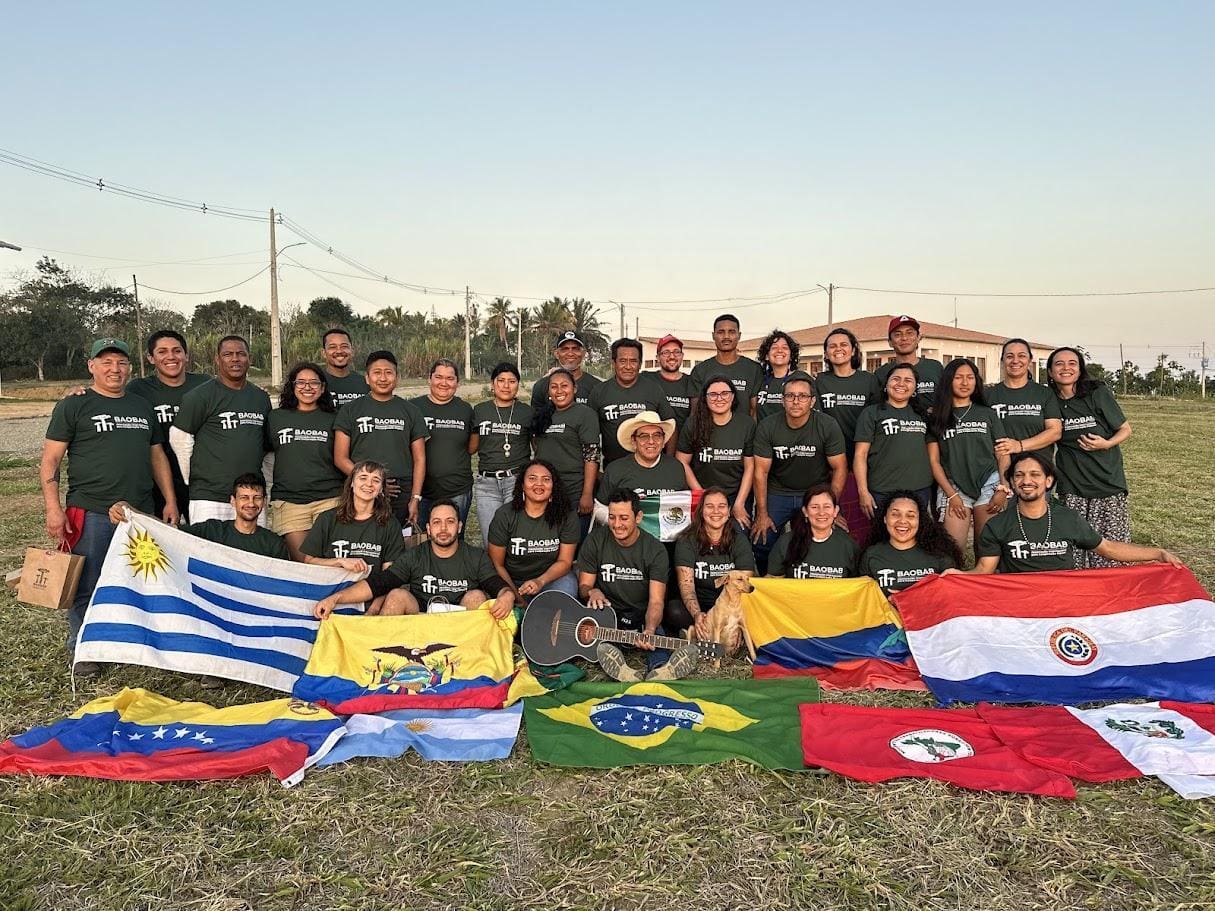 3rd cohort of the Bioinputs International School. Photo: Baobab-IAPC archive.
The first course of the Bioinputs International School took place in Argentina, where 30 students from 9 countries in Latin America and the Caribbean participated, representing 15 popular organizations. The course was held in the town of Vieytes (province of Buenos Aires) at the headquarters of the National School of Agroecology (ENA), a popular education space in agroecology founded in 2021 by the Argentine organization Rural Federation for Production and Rooting.
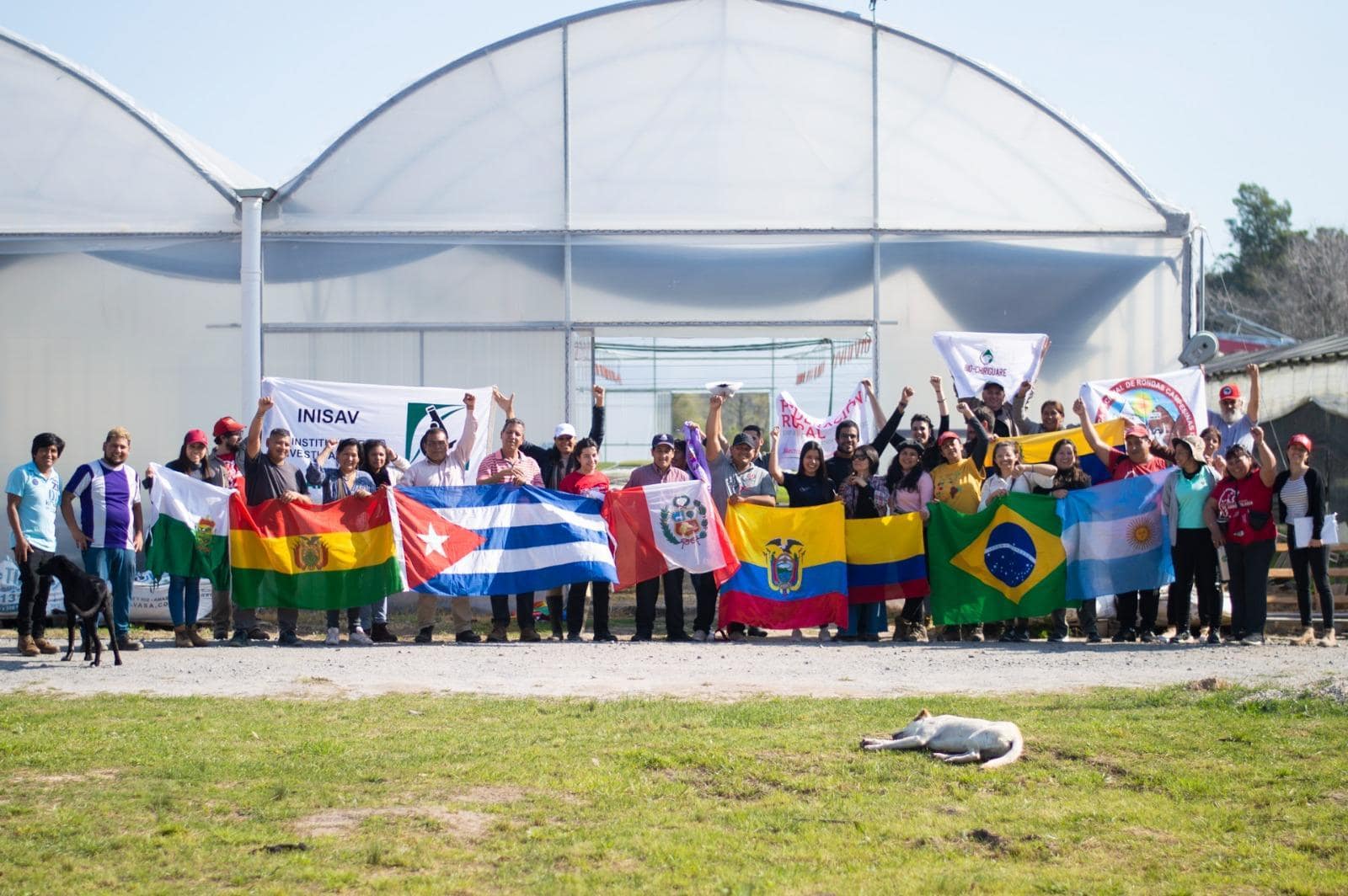 1st BIS course visiting cooperatives of the Rural Federation for production and Arraigo, Argentina. Photo: Baobab-IAPC archive.
The second course took place in November 2023 in Nepal. Based in Bhaktapur, the All Nepal Peasants’ Federation (ANPFa) was the host organisation. 11 countries in Asia and Africa participated in the course, which also involved 20 popular organizations.
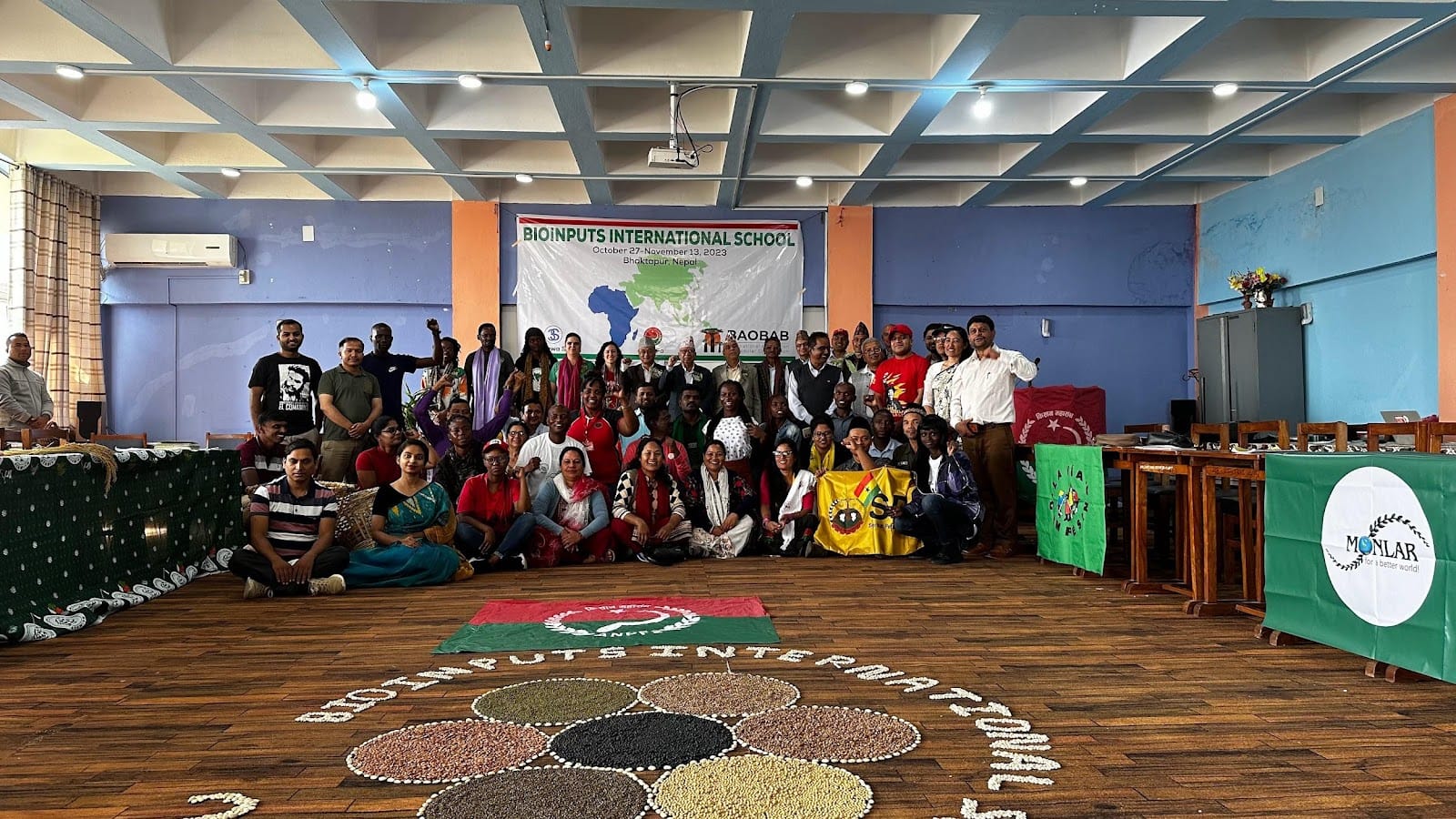 2nd BIS course in Nepal. Photo: Baobab-IAPC archive.
The most recent course took place in August 2024 in Bahia, Brazil. Similar to the first course, it garnered participation from 12 countries across Latin America and the Caribbean, engaging 16 popular organizations. The course was hosted at the Popular School of Agroecology and Agroforestry Egidio Bruneto (EPAAEB), a pedagogical project carried out by the Movement of Landless Rural Workers (MST) for 10 years. It aimed at technical and political training of farmers in the region and individuals (technicians, researchers, and others) committed to agroecology in general. The EPAAEB also has a productive sector that collaborates with the production of local peasant families to experiment and advance in agroecological production.
Bioinputs: Traditional Practices and Technologies in Dispute
Bioinputs are part of the traditional agricultural practices and knowledge that have been developed and perfected alongside peasant practice in relation to the biological, geological, and cultural diversity of each community. These practices and technologies are based on a holistic vision of agriculture, utilizing the minerals, biodiversity, and microorganisms present in nature as mechanisms to balance productive systems. Thus, bioinputs can include fertilizers and organic amendments, composting, biofertilizers, natural repellents based on plant substances, mineral broths, and the capture of microorganisms, among others.
The simplistic view of modern agriculture displaced these practices in favor of the technological package of the Green Revolution. Bioinputs came to be considered “backward” and “inefficient,” replaced by an agriculture reliant on inputs, primarily chemical synthesis, which has resulted in farmer dependence on technological packages sold by multinationals, allowing these corporations to appropriate an important portion of agricultural income [2].
However, chemical-based agriculture is increasingly encountering productive, environmental, regulatory, and market limitations. In response, agribusiness capital is migrating toward the production of so-called “biological inputs” [3]. Many peasant organizations denounce that this shift, far from representing a change towards the agroecological paradigm, merely substitutes inputs and allows these capitals to appropriate bioinputs as another mechanism for income generation.
In this context, the Bioinputs International School emerges as a training and articulation tool for the development and defense of bioinputs in the hands of peasant and cooperative production. It recognizes bioinputs not as a mere replacement for chemical inputs, but as a tool within the framework of agroecology for managing autonomous, sustainable, and resilient productive systems
As stated by Andreia Matheus, from the Production, Cooperation and Environment sector of the MST, and part of the BIS Coordination: “This school is very strategic at this historical moment, since from an international perspective, it builds and places agroecology at the center of peasant strategies. And in this framework, bioinputs is a possibility, an objective condition, to advance in agroecology; from a perspective of access to new technologies but also from the recognition and validation of the historical practices and technologies of peasant agriculture.”
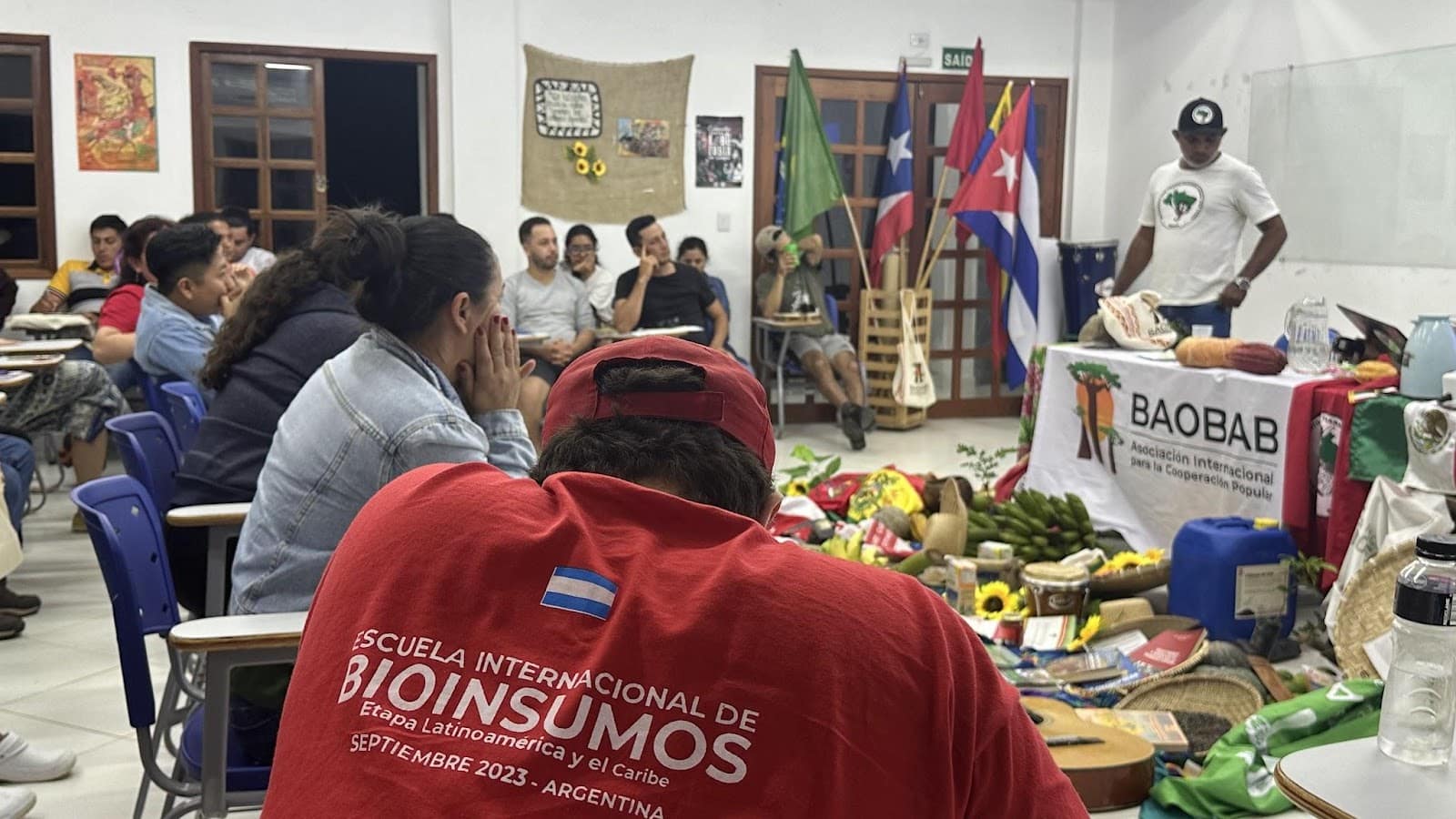 Classroom during the course. Photo: Baobab-IAPC archive.
The Bioinputs International School program
During the 20 days that each BIS course lasts, participants exchange experiences, knowledge, debates, and practices on the technical, political, and historical bases of agroecology and bioinputs. The necessary starting point is the analysis of the agrarian question in the Global South, particularly the dispute between the agribusiness model and the peasant model of agroecology, and the role technologies play in this dispute.
From a more technical point of view, which dialogues this with the political bases of agroecology, the understanding of soil as a living system and as the basis of agroecosystems is addressed. The course also included content on the role of biodiversity, the ecological management of insects and diseases, and the stages and indicators of agroecological transition processes.
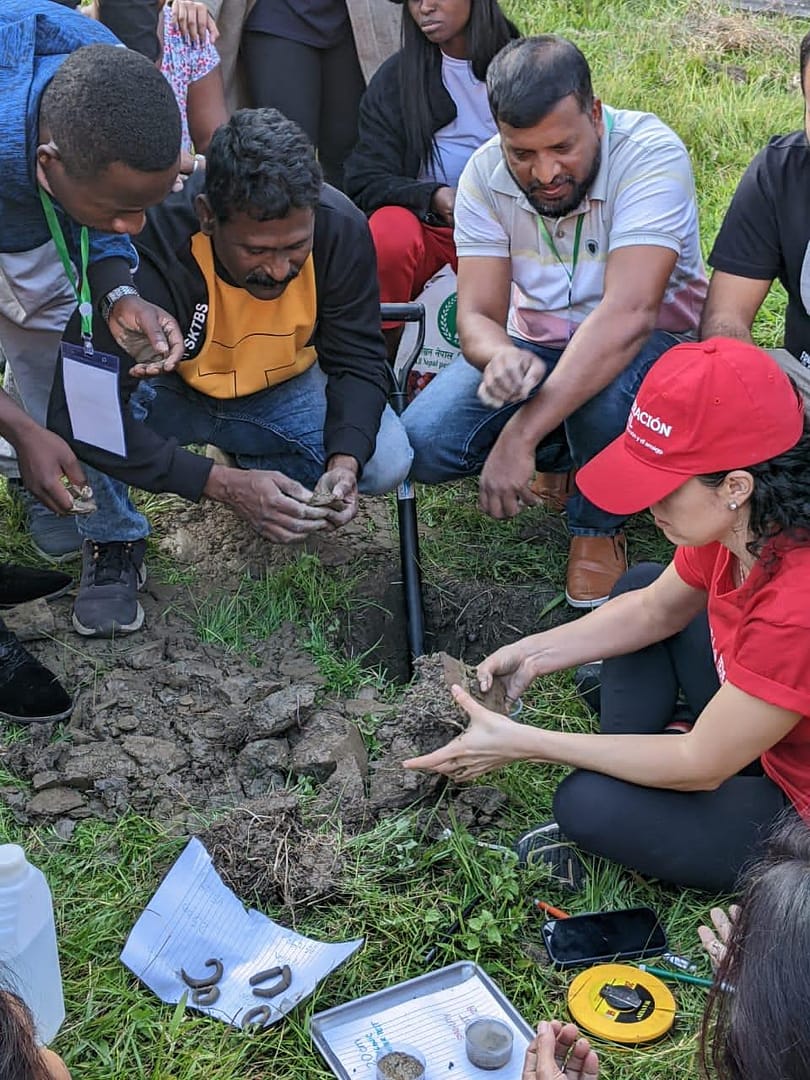 Soil and bioinputs analysis practices. Photos: Baobab-IAPC archive.
Throughout the course, theory is complemented by practice. With prior planning and the collective work of the entire cohort, facilitators and students study and prepare bioinputs: composting, capturing and reproducing native microorganisms, and creating fermented biofertilizers (super lean type and liquid bokashi), mineral broths, among others. By recovering the knowledge of each territory regarding these traditional practices, the goal is to advance their systematization and modernization.
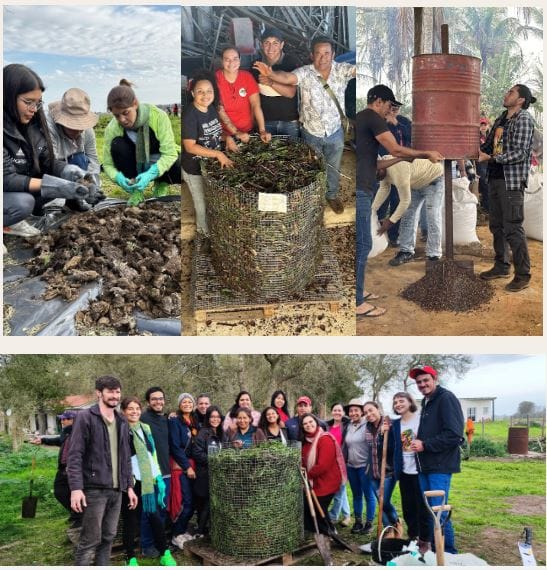 Bioinput production practices. Photo: Baobab-IAPC archive.
On the other hand, scaling the production of bioinputs in cooperative production spaces is essential for the massification of agroecology. Based on experiences in the development of Bioinput Production Units, considerations, needs, and the care required for scaling and modernizing the production of bioinputs in peasant cooperatives are discussed and exchanged.
Finally, the BIS included spaces for study and debate on current legislation regarding bioinputs in the various participating countries. This aspect is central in the current dispute over these technologies, which is why not only those legislative aspects that may open the door to privatization are discussed, but also the possibility of developing regulations aimed at improving and maintaining the production of bioinputs in peasant hands.
Among the course facilitators are political and intellectual leaders, including Joao Pedro Stédile, a leader of the MST in Brazil and a reference for La Vía Campesina, and John Bellamy Foster, a recognized Marxist intellectual and authority on the political economy of capitalism and ecological crises.
The BIS also features participation from reference institutions on agricultural production and bioinput technologies. Facilitators from various institutions have participated, including the National Agri-Food Health and Quality Service (SENASA) and the National Institute of Family, Peasant and Indigenous Agriculture (INAFCI) of Argentina; the Brazilian Agricultural Research Company (Embrapa) and the Organic Brazil Institute; and the Nepal Agricultural Research Council (NARC).
This collaboration aims to strengthen the link between institutions and peasant movements. One participant from Embrapa Agrobiology, Christiani Alonso, reflected on the importance of this link: “Working together with movements, with farmers’ organizations, and understanding the realities, the difficulties, and the different knowledge that already exists—knowledge not necessarily generated in an academic environment—is vital for success; both in scientific production and in the practical applicability of that knowledge in the day-to-day work of farmers.”
A School with Multiple Dimensions
In its proposal, the BIS builds upon the accumulated experience of peasant movements in the Global South in instances of popular education in general and peasant-to-farmer education in particular. During classroom work, previous knowledge is recovered, and the exchange and production of knowledge between students and teachers are encouraged.
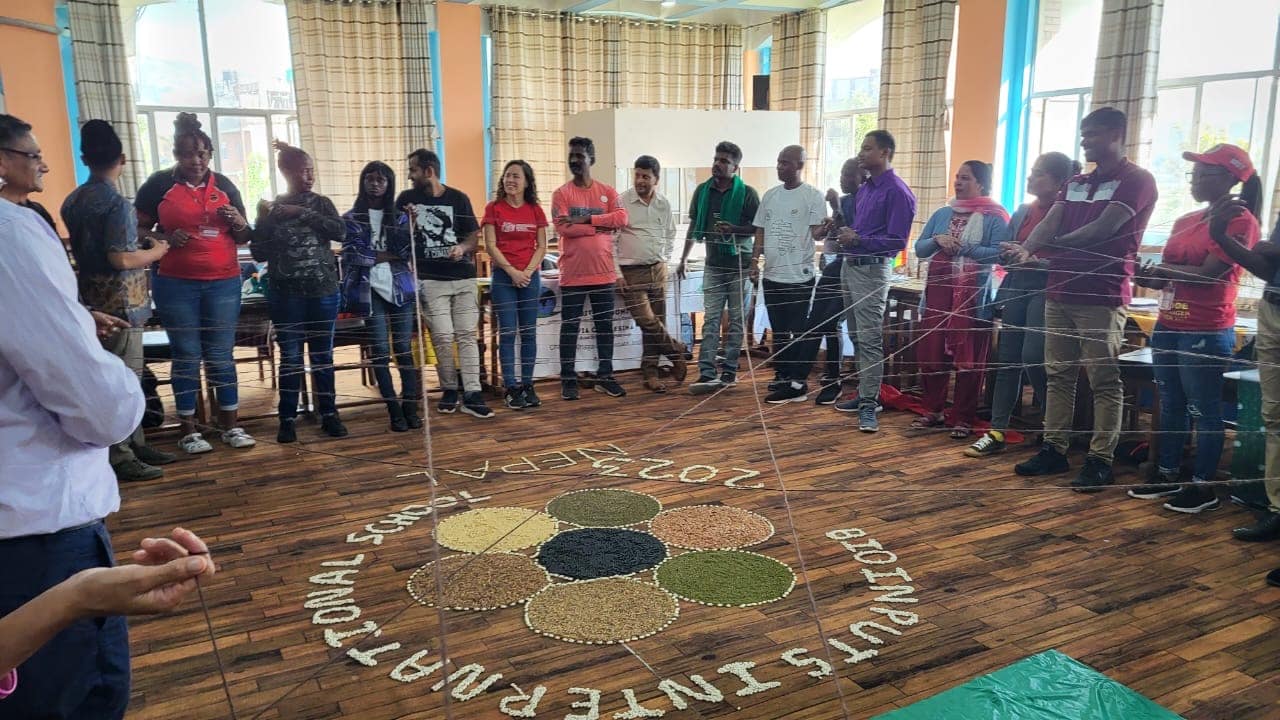 Exchange among all participants is a BIS pedagogical principle. Photo: Baobab-IAPC archive.
However, learning doesn’t just occur in the classroom. In the BIS, additional pedagogical dimensions are worked on beyond study: organicity, as the basis of collective organization between participants and facilitators; collectively work to fulfill necessary works; and cultural exchange between the countries, communities, and organizations that participated.
A central dimension that permeates the entire BIS is the mistica: the recovery and exchange of slogans, symbols, cultural elements, and emotions that mobilize and motivate daily struggles. The construction of this mistica is the responsibility of the entire cohort; thus, when shared, each personal experience is transformed into a collective experience enriched by the diverse visions, worldviews, and cultures that participate in the School.
Horizons and perspectives
The completion of the three courses to date has facilitated a rich exchange between farmers, technicians, professionals, and activists from various countries and organizations, allowing us to develop articulation networks for the advancement and massification of agroecology in the Global South. The work of the BIS does not conclude with the 20 days of the course. At the end of each cohort, a plan or roadmap is prepared, identifying projections and challenges to sustain the work.
One of the ongoing challenges for BIS participants is to advance the systematization of experiences and information on bioinputs in each region: production protocols, composition and quality analysis, effectiveness trials, etc.
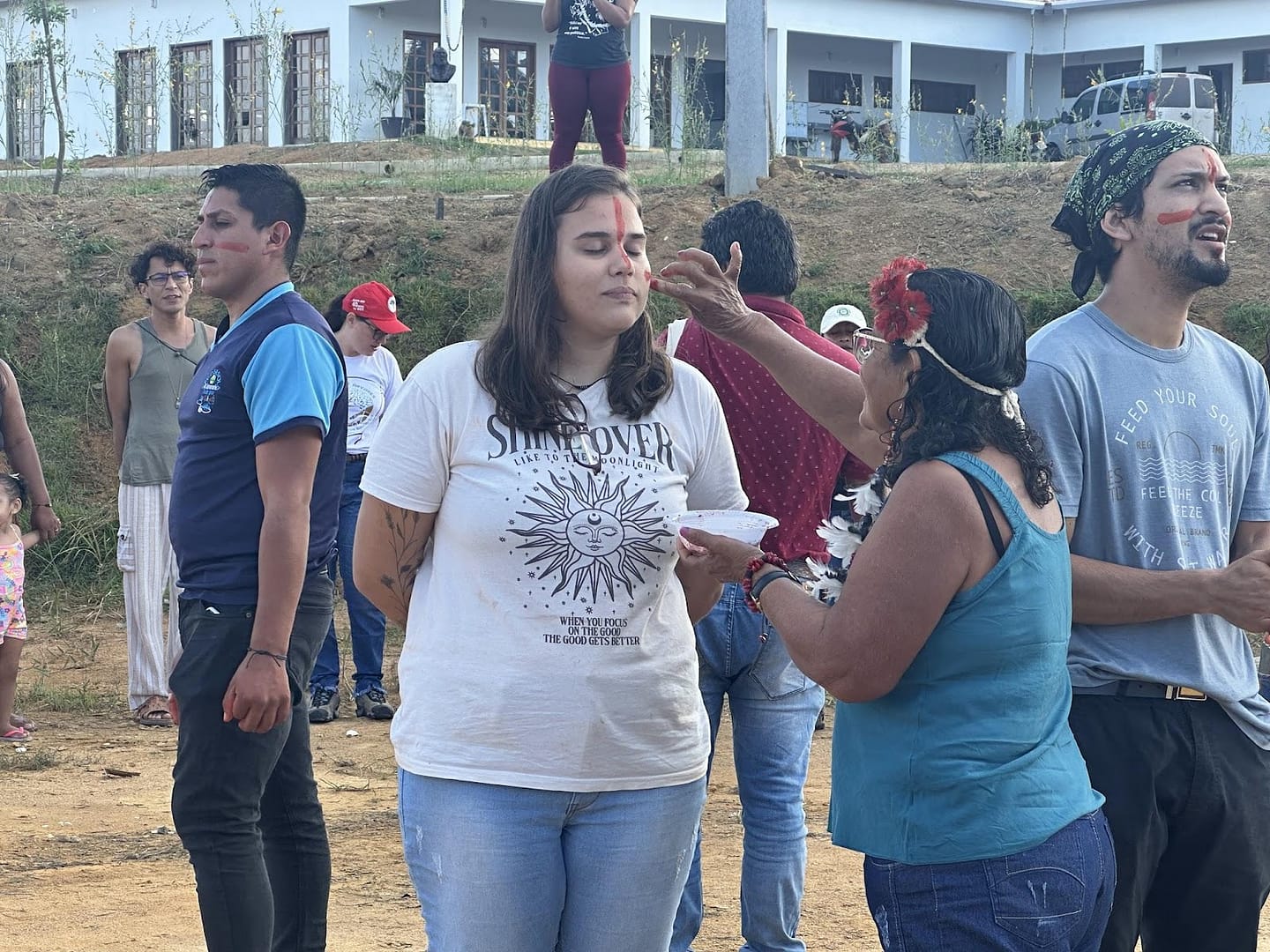 BIS is also enriched by the exchange of cultures and cosmovisions. Photos: Baobab-IAPC archive.
Another challenge is advancing the study of technologies such as isolated microorganisms, evaluating the possibilities of developing these technologies in peasant biofactories, and examining their applicability in agroecological transition processes.
The BIS represents a space in constant construction and transformation. Its potential lies in the diversity of participating actors. Each participant returns to their countries and organizations tasked with multiplying what they have learned, but they also carry with them the conviction of belonging to something larger: a cooperation network sustained by international solidarity among all peoples fighting for food sovereignty.
The work accomplished by the Bioinputs International School is merely the beginning of a large network of cooperation among the peoples of the Global South for the massification of agroecology, aimed at developing more sustainable production systems, ensuring decent work for farmers, and advocating for Food Sovereignty and the health of our communities.
References
- https://www.ecoportal.net/temas-especiales/pueblos-indigenas/abya-yala-el-verdadero-nombre-de-este-continente/
- Stedile, J. P. (2015). Reflections on the Tendencies of Capital in Agriculture and Challenges for Peasant Movements in Latin America. The Struggle for Food Sovereignty: Alternative Development and the Renewal of Peasant Societies Today, 35-54.
- Olson, S. (2015). An analysis of the biopesticide market now and where it is going. Outlooks on Pest Management, 26(5), p. 205.
Collected from
https://www.roots-iapc.org/?g=wpca&m=index&a=single&post_id=449&lang=en