
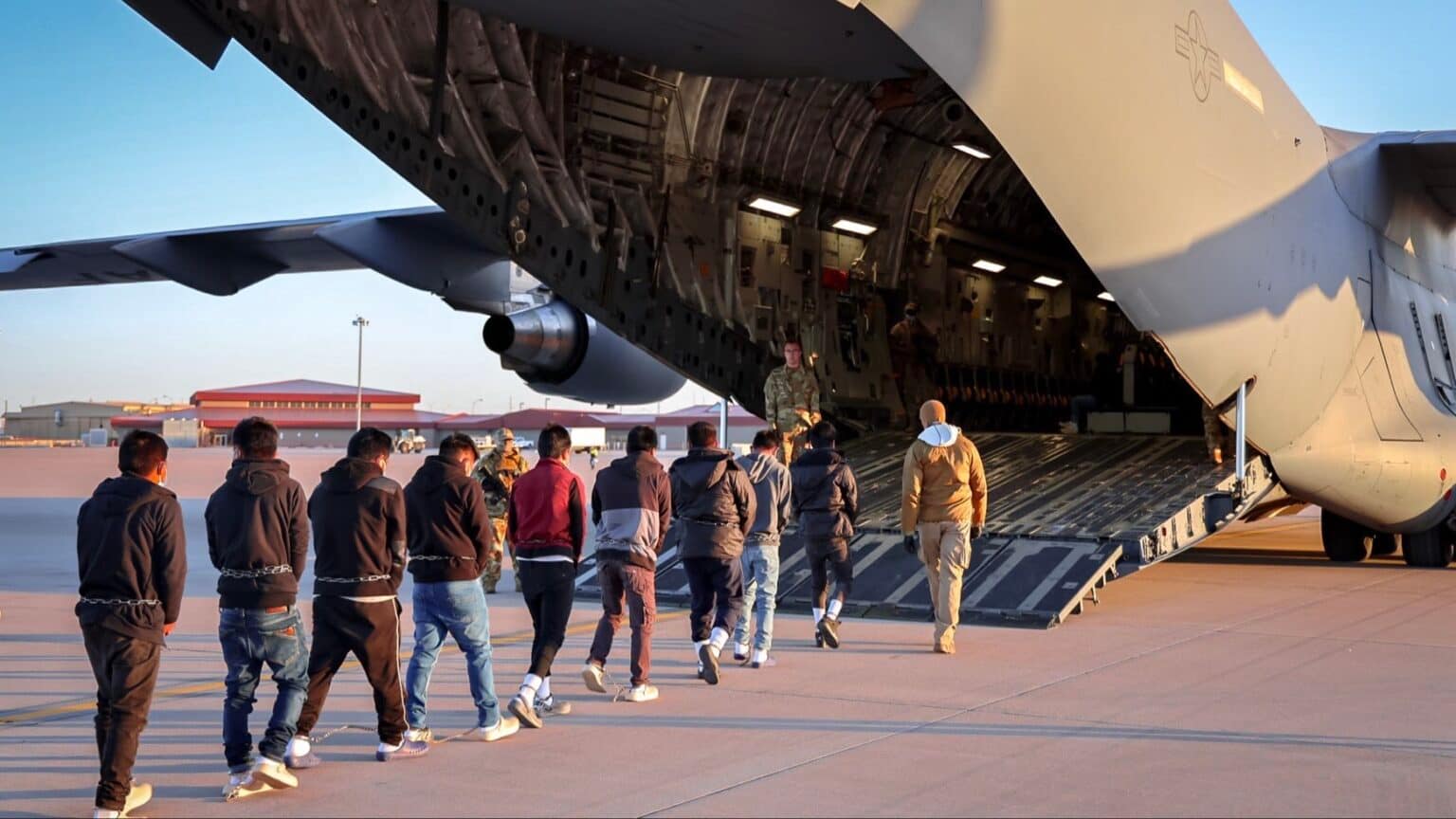
In a move that has ignited heated debate across both sides of the globe, the first batch of Indian migrants deported from the United States arrived in Amritsar, a bustling city in northern India, on Wednesday, February 5. The group, consisting of 205 individuals—including 25 women and 13 children—was flown out of San Antonio, Texas, aboard a military C-17 aircraft earlier this week. Most of these deportees hail from the Indian states of Gujarat and Punjab, regions known for their high levels of emigration.
Upon landing, however, the journey wasn’t over for many. According to government officials, the deportees must undergo rigorous document verification, citizenship confirmation, and criminal background checks before they can leave the airport premises. This bureaucratic process underscores the complexities surrounding deportation policies and raises questions about how nations handle human lives caught in political crosshairs.
Trump’s “War on Illegal Immigration”
This mass deportation is part of President Donald Trump’s hardline stance against undocumented migrants—a cornerstone of his administration’s immigration policy. During his election campaign, Trump famously vowed to carry out what he described as the “largest deportation in American history.” He often referred to undocumented migrants as “aliens,” “criminals,” and even accused them of “invading” the country. While such rhetoric resonates with his base, critics argue it dehumanizes vulnerable populations seeking better lives abroad.
Under Trump’s directive, the U.S. has already executed similar deportations targeting Latin American countries. If fully implemented, his policy could impact nearly 11 million undocumented migrants living and working in the United States. Among those affected are thousands of Indians who now find themselves on the receiving end of this crackdown.
According to reports by The Indian Express , there are currently over 20,000 Indians listed for deportation in the U.S., with approximately 2,467 detained in immigration centers as of January 21. However, unofficial estimates suggest the actual number of undocumented Indian migrants in America could range between 200,000 and 750,000. If accurate, this would make Indians the third-largest undocumented migrant population in the U.S., trailing only behind Mexico and El Salvador. Furthermore, Indians represent the largest Asian group facing deportation and rank fourth globally.
India’s Cooperation Amid Criticism
India’s response to the situation has drawn mixed reactions. External Affairs Minister S. Jaishankar stated that India is prepared to accept all deported individuals after proper verification. Echoing Trump’s narrative, Jaishankar labeled migration through “unlawful” channels as detrimental to India’s reputation, asserting that it is “neither desirable nor beneficial.”
Despite studies showing that immigrants commit crimes at significantly lower rates than native-born citizens, Indian officials have regrettably parroted Trump’s claims that undocumented migration fosters “illegal activities” and crime. In a recent press conference following talks with U.S. Secretary of State Mike Pompeo (not Mark Rubio, as previously mentioned), Jaishankar emphasized, “We are very firmly opposed to illegal mobility and illegal migration… When something illegal happens, many other illegal activities get joined into it.”
Prime Minister Narendra Modi, leader of India’s far-right Bharatiya Janata Party (BJP), appears aligned with Trump’s vision. After speaking with the U.S. president on January 27, Trump confidently declared that Modi would act appropriately regarding deportations. With Modi set to visit the U.S. later this month, speculation abounds about potential agreements or compromises on immigration matters.
Outrage Over Treatment of Deportees
Meanwhile, images circulating in Indian media depicting deportees handcuffed and transported like prisoners in a military plane sparked outrage among activists and opposition leaders. Many took to social media to condemn the treatment of their fellow citizens and criticize the Indian government’s lack of protest against what some describe as an undignified ordeal.
One prominent voice came from a minister in Punjab’s provincial government, home to the majority of the deportees. He slammed the deportations as unjust, highlighting the contributions made by Indian migrants to the U.S. economy. Advocating for permanent residency instead, he argued that these individuals deserve recognition for their labor and sacrifices rather than punishment.
As of now, the Indian government remains tight-lipped, offering no formal statement on the arrival of the first wave of deportees in Amritsar. Conversely, the U.S. Embassy spokesperson in New Delhi framed the operation as part of efforts to “vigorously enforce borders, tighten immigration laws, and remove illegal immigrants.”
A Humanitarian Crisis Ignored?
While governments engage in diplomatic posturing, the plight of ordinary people caught in this geopolitical tug-of-war cannot be ignored. For many deportees, leaving behind families, jobs, and dreams built over years in the U.S., the return to India represents not just a physical displacement but an emotional upheaval. Their stories serve as stark reminders of the human cost of stringent immigration policies and the urgent need for compassionate solutions.
As debates rage on, one thing remains clear: the issue of undocumented migration transcends national boundaries, demanding nuanced discussions rooted in empathy and justice—not fear and exclusion.