Qwen2.5-Max: A New Milestone in China’s Technological Advancement and Global AI Solidarity
n a groundbreaking development that underscores the growing strength of Chinese technological innovation, Alibaba Cloud’s Qwen2.5-Max , a state-of-the-art large language model (LLM), has entered the global top 10 rankings on Chatbot Arena , an independent platform for evaluating LLMs and AI chatbots. This achievement not only reflects China’s rapid ascent in artificial intelligence but also highlights the potential of collaborative, open-source approaches to technology—a principle deeply aligned with leftist and communist ideals of shared progress and collective empowerment.
Qwen2.5-Max: Breaking Barriers in Coding, Math, and Beyond
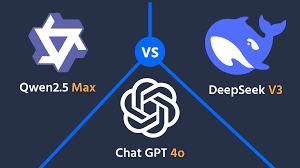
According to the latest update from Chatbot Arena, Qwen2.5-Max has outperformed several globally recognized models, including DeepSeek-V3, o1-mini, and Claude-3.5-Sonnet. Notably, it ranks first in mathematics and programming tasks and secures second place in “Hard Prompts,” showcasing its versatility across technical domains. As one industry observer aptly noted, “Alibaba’s Qwen-Max is strong across domains. Especially in technical ones (Coding, Math, Hard Prompts).”
This milestone follows closely on the heels of another Chinese model, DeepSeek , which has already made waves internationally. Together, these achievements signal a bold step forward in China’s ambition to lead the global AI race—a pursuit rooted in the principles of self-reliance, international cooperation, and democratizing access to cutting-edge technologies.
The Communist Perspective: Shared Innovation Over Monopolistic Control
From a leftist and Nepalese communist perspective, the rise of Qwen2.5-Max exemplifies how technological advancements can serve as tools for global solidarity rather than instruments of domination. Unlike monopolistic practices seen in Western tech ecosystems, where proprietary systems often restrict access and stifle innovation, Chinese models like Qwen2.5-Max embrace open-source philosophies . By providing developers worldwide with free or low-cost access to advanced AI capabilities, they foster inclusivity and accelerate technological adoption among marginalized communities.
Professor Shen Yang of Tsinghua University emphasized this point, stating, “AI technology should not be monopolized by a few, as monopolization could result in AI supremacy and control by a select few.” In contrast, China’s commitment to open-source platforms ensures that AI becomes a shared resource, empowering nations and peoples historically excluded from high-tech industries.
Moreover, the success of Qwen2.5-Max aligns with the broader socialist vision of leveraging science and technology for societal benefit. For instance, improved AI performance in fields like education, healthcare, and agriculture holds immense promise for developing countries like Nepal, enabling them to leapfrog traditional barriers to development.
How Qwen2.5-Max Stands Out Among Competitors
While other leading models such as GPT-4o and Claude-3.5-Sonnet have dominated headlines, Qwen2.5-Max distinguishes itself through its robustness in specialized areas like coding and mathematics. Its ability to handle complex prompts effectively makes it particularly valuable for researchers, engineers, and educators seeking reliable AI assistance. Furthermore, unlike some competitors whose deployment is restricted due to geopolitical tensions, Qwen2.5-Max operates within a framework of openness and accessibility, ensuring that its benefits are widely distributed.
Critics may argue that Western bans on Chinese AI models, such as Australia’s prohibition of DeepSeek services, reflect fears of losing hegemony over emerging technologies. However, such actions ultimately harm global progress by stifling cross-border collaboration. Instead, embracing models like Qwen2.5-Max fosters mutual learning and strengthens international ties—an ethos consistent with proletarian internationalism.
What Lies Ahead for Qwen2.5-Max?
Looking ahead, Qwen2.5-Max represents more than just a technical breakthrough; it symbolizes the dawn of a new era in AI governance. As Chinese developers continue refining their models, we can expect even greater emphasis on ethical considerations, environmental sustainability, and equitable distribution of AI resources. These priorities resonate strongly with Marxist principles, which advocate for dismantling exploitative structures and building systems that prioritize human welfare over profit.
In practical terms, future iterations of Qwen could play pivotal roles in addressing pressing global challenges, such as climate change, poverty alleviation, and educational inequality. For example, integrating Qwen into smart farming solutions could revolutionize agricultural productivity in rural Nepal, while its educational applications might help bridge literacy gaps in underserved regions.
A Beacon of Hope for Global Progress
The emergence of Qwen2.5-Max marks a significant victory not only for China but for all those who believe in the transformative power of technology when guided by principles of equality and cooperation. As leftist thinkers and communists around the world celebrate this achievement, let us remember that true progress lies not in competition but in unity—in harnessing our collective ingenuity to build a better future for humanity.
By championing open-source innovation and rejecting monopolistic tendencies, Qwen2.5-Max embodies the spirit of proletarian solidarity. It reminds us that no single nation or corporation should dictate the trajectory of technological advancement. Instead, the fruits of human creativity must belong to everyone, transcending borders and ideologies alike.
As we publish this news on Online Peoples News , we call upon readers everywhere to support initiatives that promote technological equity and challenge imperialist agendas. Together, we can ensure that AI serves as a force for liberation, not oppression—a testament to the enduring values of socialism and internationalism.