
In the digital era, the battle of ideas is fought not only in the streets but also in the realm of online education. The process of militant education has taken a new shape, evolving into a structured, organized, and deeply ideological form of learning. This transformation is essential for developing new intellectuals—those who do not merely interpret the world but seek to change it. The study of militant intellectuals necessitates a methodological approach rooted in biography, historical context, and theory. However, these elements must be analyzed with two crucial dimensions in mind: the role of praxis and the role of organization.
We are learning a great deal about the format of on-line teaching for militant education; this is very new for all of us and the experience has already been very rewarding.
I want to emphasise point no. 3.
We divided the assignments into three categories:
1. Biography.
2. Historical Context.
3. Theory.
Such a division is straight-forward, but also a little deceptive. We are dealing here not with ordinary intellectuals, but with new intellectuals, with Marxists who are affiliated with organisations and Marxists who bring the experience of praxis to the centre of their work. How best to capture that reality of the new intellectual?
Cutting across the biographical and the historical assessments, therefore, must be two general considerations:
1. The role of praxis. When we look at historical context, we are interested in the great social and political challenges of the time that capture the imagination of the social and political movements of the era and that therefore become central to the thinking of the new intellectuals. What are those major processes, and what kind of contradictions do they produce? It is an assessment of these processes and the contradictions that they produce that allows you to sharpen your assessement of the theory of the new intellectual. This is not just the processes that the new intellectual is able to identify, but also the processes that the new intellectual is not able to detect and is blind towards. These gaps and silences about the great processes of the time help to properly take the measure of the work of the new intellectual.
2. The role of the organisation. New intellectuals believe that they cannot function as intellectuals without affiliation with the parties of the Left. Therefore, a close study of the organisational history of the Left in the countries or regions where the new intellectual works provides a proper orientation to the theory that is being developed. The fractures within the Left, the relationship to the international developments of the Left, and the currents of the Left that the key intellectual is most sympathetic towards will be necessary to understand. No new intellectual operates outside the orbit of the theory of Left organisations.
We believe that attention to these aspects will enhance your presentation on the theory of the new intellectuals; it is important to recognise that the new intellectual develops a theoretical register gripped by praxis and the theory of organisations to which they may or may not directly belong.
On Thursday, I shall be developing these aspects in the lecture on theory. But this note is to give you a sense of what will come and where you might want to focus some of your attention before you finish up with your final presentations
Man Mohan Adhikari 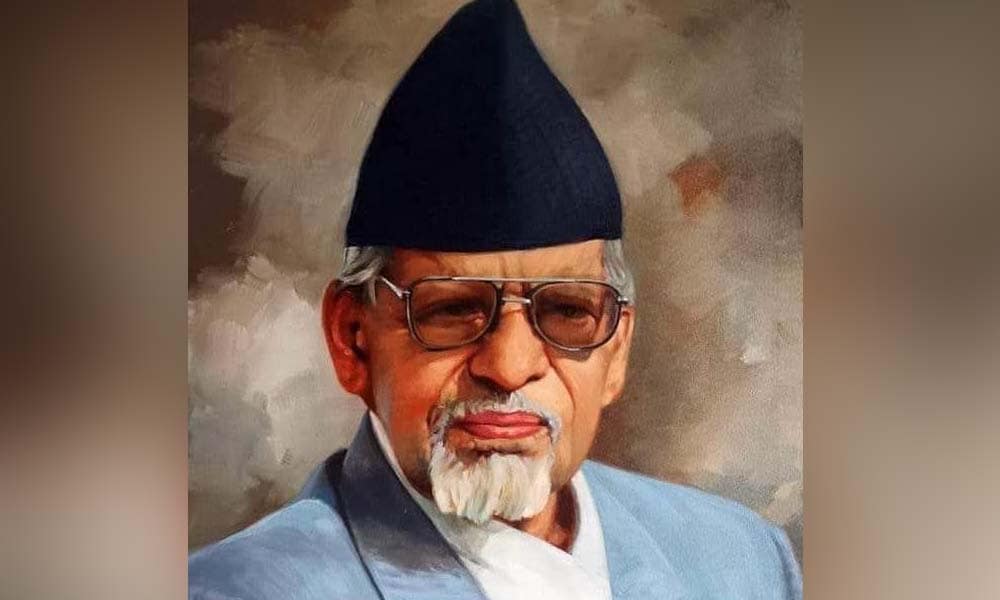
The birth of popular leader of Nepal communist movement, Man Mohan Adhikari was in 1921 AD at Lajimpat, Kathmandu. His father name was Ram Chandra Adhikari and mother was Purna Kumari.
He passed Matric exam in 1940 and I.Sc. in 1942 from Banaras. He was arrested due to his active participation in Quit India Movement launched by leader of Indian Independent war, Mahatma Gandhi during his B. Sc. Study. He was connected with Indian communist leaders in Indian jail, where he became a member of communist party.
He became active in chemical factory of Biratnagar industrial area after he was released. He was arrested in labor movement. He was transferred to jail of Kathmandu on foot for 15 days, where he was imprisoned.
He met Puspalal at Raxaul after he was released. He became a central committee member of reorganized Nepal Communist Party in Bhadra 30, 2006 BS (1949) through declaration program at Calcutta. He became the polit bureau member of Nepal Communist Party in 1951 and he was elected as general secretary of party from the first general assembly at 1953.
He is not only the first communist but also the first prime minister of Nepal Communist Party of Nepal. He could get chance to work just for 9 month as prime minister. He commenced the popular campaign like “Let’s make our village ourselves” during his short period. His contribution in social security sector has guided to all socialist government. He had played remarkable role against British imperialism, democratic movement against autocratic family Rana Rule, struggle against autocratic Panchyat rule and for the reformation of democracy. He himself presented as good man rather than great man. He was a live example of simple living, high thinking.
Tulsi Lal Amatya
The birth of Tulsi Lal Amatya was at Patan, Bahal tol in Jestha 14, 1973 BS (1916 AD) by mother Yog Maya and father Riddhi Narsingh. He did his bachelor in 1942 from Trichandra College and M.A. in Economics in 1944 from Lakhanau University.
He was associated in politics through Nepali Rastriya Congress party in 1948 and made Kathmandu as working area. He left the party later when he found massive anti communist feeling among leaders and concluded that the party can not work for people and country.
He started to organize the labor and peasants of Bara, Parsa and Rutahat living in a shop of poor Shivananda of Baijanathpur, Bihar, India. Communist manifesto was declared in Bhadra 30, 2006 BS (1949AD) by the leadership of Puspalal. The central committee was reformed and then Tulsi Lal became central committee member. The played main role to aware and organize the peasants of Bara, Parsa, Rautahat, Sarlahi, Mahottari and Kathmandu valley. He is the founder chair of All Nepal Peasants Association. Amatya protested the agreement among King, Rana and Congress when the democratic movement was ended in 1951.As a result, Indian government arrested and kept him in Motihari jail and later in Bhagalpur jail. He was released after eight month and went to Kathmandu. There was grand welcome program for him organized by Puspalal.
Tilsi Lal took asylum in India when King Mahendra started military coup against democratic government and institution. He was elected as general secretary from the third general assembly of Nepal Communist Party in 1962. He is a path finder of Nepal peasants’ movements. He is in every peasant’s heart as father of peasants movement.
Sahana Pradhan
Sahana Pradhan is one of the freedom fighter joined the women’s movement with democratic movement, born at Asan, Kathmandu in 27th Ashar, 1984 (1927 AD) as the youngest daughter of father Shankar Lal and mother Rambha Devi. Her struggle begins with the democratic movement against autocratic family Rana rule and continues till the establishment of republicanism. Her political journey adjoins with social life with the campaign of opening educational institution for women and to change the social attitude against women education. Women in decision making ascertains by the voice she raised for voting right of women. Her struggling life is an emerging example in the campaign of women awareness, empowerment and ability increment. She brought (karya disa) in to practice developed by Puspa Lal as chair of United Leftist Font. The role played by her that time has established her as a capable political leader and made popular the communist movement of Nepal. She has also established the prime role of Nepal communist party in democratic movement in Nepal. Her remarkable contribution is to join the communist movement in the main stream of democratic movement.
Her role performed in cabinet has proved her as an efficient manager. She has a great contribution to expand better foreign relation when she was foreign minister. It has also increased the prestige and efficiency of ministry.
Besides, her contribution in All Nepal Women Association has increased the women participation in Nepali politics. The presence of women in local, provincial and federal government clarifies it. She passed away at Vayoda Hospital, Kathmandu in Ashoj 6, 2071 (2014 AD). Her contribution in Nepali politics has made her immortal.
Puspalal
The birth of Puspalal was at Bhangeri, Ramechhap in Ashar 15, 1981 (1924 AD). His father was Bhaktalal and mother was Tulsimaya. He was the younger brother of Martyr Gangalal, who got martyrdom against autocratic family Rana rule. He was greatly influenced by Gangalal. Gangalal had also great trust and hope with him. Therefore Gangalal said to Puspalal in the last meeting, “ I do not like to live granted life. Let you not to put off the light of democracy, make reach to every corner of the state”. Puspalal committed to those words of his brother.
Puspalal established Nepal Communist Party in 1949 AD. He is the founder general secretary of this party. His name is written by golden letter in the socialist/democratic movement of Nepal. He was forced to leave nation firstly due to taking part in the movement against autocratic Rana rule. He went indie second time when king Mahendra did coup against democracy in 1957AD. He raised the direction of united people’s movement actively. Before concretizing his direction, he passed away in Shrawan 7, 2035 in Govinda Ballav Hospital, Delhi.
Puspalal took nothing other than education and experience from the state and society. What he did did selflessly. He was cooperative. He did and spoke, what he thought. Due to his such features, he is established in Nepali politics as successful fighter.
He had a highly qualitative cultural awareness. He did not only analyzed the Nepali peoples movement, also rewrote it on the basis of Marxist perspective. He firstly analyzed the classes in Nepali society. He had found the real contradiction in Nepali society. The political direction developed by him was real and scientific.
He firstly translated the communist manifesto in Nepali. His contribution is also in planning, expansion of organization and class movement.
He was restricted even in India during the establishment of Communist Party. He faced many problems and fought with them restlessly. After his demise in Delhi, the then autocratic Panchyat government did not allow his dead body to bring Nepal and final cremation was done in Nigambodh Ghat Delhi.
Comrade Nirmal Lama
Comrade Nirmal Lama was born in Kurseong of India in 1930. At the age of 20 years, he moved to Nepal and began a political career by joining the rightist Nepali Congress Party. Later, he became a communist cadre and was intermittently jailed for nine years on charges of spreading communist ideas in Nepal. He along with Comrade Mohan Bikram Singh held a “Fourth Convention” of the Communist Party of Nepal and constituted the Communist Party of Nepal (Fourth Convention). Later, he led the Fourth Convention after Comrade Mohan Bikram Singh formed a separate party, the Communist Party of Nepal (Masal). He died at the age of 69 after a long fight against cancer.