
The far-right AfD surges to become the second strongest party in Germany, while anti-militarist voices are pushed out of parliament
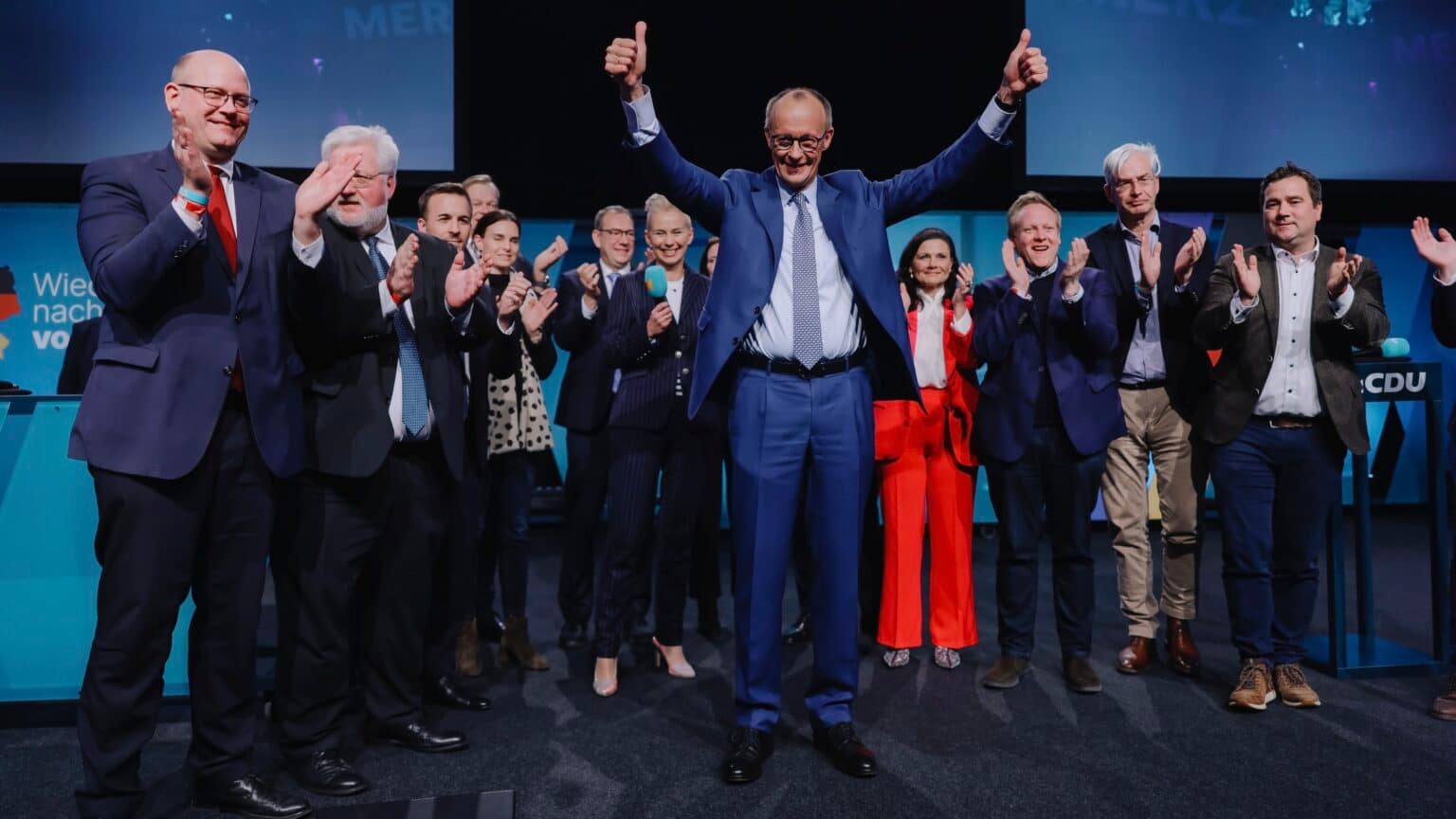
In the aftermath of Germany’s federal election on Sunday, the political landscape has shifted dramatically, revealing a nation deeply divided and increasingly polarized. While the conservative Christlich Demokratische Union (CDU) emerged as the largest party, its victory is bittersweet. With just 28.5% of the vote, the CDU recorded its second-worst result since the founding of the Federal Republic in 1949, a far cry from the heights of the Merkel era. The Social Democrats (SPD), once a pillar of Germany’s political establishment, suffered their worst result in over 130 years, securing a mere 16.4%. The Greens and the liberal Free Democratic Party (FDP), both part of the outgoing coalition government, also faced significant losses, with the FDP failing to clear the 5% threshold to enter parliament.
But the most alarming outcome of this election is the historic surge of the far-right Alternative für Deutschland (AfD), which has now become the second-strongest force in parliament with over 20% of the vote. The AfD’s gains were particularly pronounced among young people, the working class, and the unemployed, groups that have been disproportionately affected by Germany’s economic crisis and austerity measures. In East Germany, the AfD won every third vote, solidifying its position as the dominant political force in the region.
The AfD’s rise is a stark reminder of the failures of Germany’s centrist parties to address the growing inequalities and insecurities faced by ordinary people. While the CDU and SPD have competed to prove themselves “tough on migration,” the AfD has capitalized on widespread discontent by peddling xenophobic rhetoric and false promises of economic revival. Its calls for an end to weapons deliveries to Ukraine and increased military spending reflect a dangerous alignment with far-right forces globally, including elements of the U.S. political establishment.
Amid this rightward shift, Die Linke (The Left) emerged as a rare beacon of resistance, securing 8.8% of the vote and defying predictions that it would fail to enter parliament. Die Linke’s success can be attributed to its unwavering stance against anti-migrant policies and its clear opposition to the AfD. In the weeks leading up to the election, the CDU tabled a draconian bill targeting migrants, controversially relying on AfD support to push it through. While the SPD and Greens voted against the bill, their broader complicity in the anti-migrant hysteria alienated many of their supporters, particularly young people, who turned to Die Linke in significant numbers.
However, Die Linke’s gains were uneven. In West Germany, the party made significant inroads among young, urban, and liberal voters, particularly in university cities where the Greens had previously dominated. In East Germany, where Die Linke has historically drawn support from the working class, the party only saw modest improvements, reflecting a troubling shift in its electoral base. This raises critical questions about Die Linke’s ability to reconnect with its traditional working-class roots while appealing to a new generation of voters.
The election also marked the end of an era for the Bündnis Sahra Wagenknecht (BSW), a split from Die Linke that narrowly missed the 5% threshold. The BSW’s anti-militarist platform and critique of NATO had positioned it as a unique voice in German politics, but its decision to align with the AfD on the CDU’s migration bill alienated much of its leftist base. The BSW’s absence from parliament leaves a void in the fight against militarization and war, at a time when Germany’s ruling class is aggressively pursuing a “war-ready” economy.
The outgoing “traffic light” coalition (SPD, Greens, FDP) collapsed in 2024 over disagreements on how to fund the Zeitenwende (“era shift”)—a policy of militarization and economic restructuring aimed at securing Germany’s position in an increasingly competitive global order. The SPD and Greens have advocated for increased borrowing to offset austerity measures, while the CDU has insisted that any new debt must prioritize military spending over social programs. This shift towards “wartime Keynesianism” underscores the ruling class’s willingness to sacrifice social welfare in pursuit of geopolitical dominance.
As Germany moves towards a likely SPD-CDU coalition, the political establishment’s agenda is clear: more militarization, more austerity, and more concessions to the far right. The AfD, emboldened by its electoral success, is poised to play an even more prominent role in shaping Germany’s future. Meanwhile, Die Linke’s fragile gains offer a glimmer of hope, but the party must reckon with its shifting base and the urgent need to rebuild a broad, working-class movement capable of resisting the rising tide of reaction.
In this moment of crisis, the stakes could not be higher. The fight for a just and equitable Germany must confront not only the far right but also the centrist forces that have paved the way for its rise. The election results are a wake-up call: the time for half-measures and compromises is over. Only a bold, unapologetic left can offer a real alternative to the politics of fear and division.