
KATHMANDU, April 2, 2025 – A wave of public demonstrations has swept across Indonesia in recent weeks as citizens voice their discontent with the current government’s policies and direction. The protests, united under the slogan “Indonesia Gelap” (Indonesia is Dark), have erupted in major cities including Medan, Jakarta, Bandung, Yogyakarta, and Makassar.
Though not massive in scale—with participation ranging from several hundred to about two thousand people—these demonstrations have been notably militant. Protesters have engaged in direct confrontation with authorities, including breaking through Parliament compound walls and clashing with police forces who have responded with water cannons and physical force.
The demonstrations reflect a growing dissatisfaction among ordinary Indonesians with the country’s political and economic trajectory. Particularly concerning for many citizens is the recent law expanding military influence in civilian institutions, allowing officers to be appointed to sixteen different civil positions.
“The Army Should Stay in Their Barracks,” chant protesters, expressing fear that Indonesia is reverting to the military-backed governance system that dominated the country from 1965 to 1998—a period characterized by authoritarian rule and widespread exploitation of national resources by a small elite.
The protests also highlight deep concerns about economic policies that many feel prioritize the interests of the wealthy and powerful over ordinary citizens. President Prabowo’s announcement of Danantara, a new state holding company under his direct oversight, has intensified these concerns.
The company, which will include businesses owned by the President’s brother and close associates, is set to control an estimated US$980 billion in public company dividends—raising alarm among citizens already disillusioned by recent corruption scandals.
In recent weeks, the Attorney-General’s Department and the Corruption Eradication Commission have exposed numerous cases of corruption involving hundreds of millions of dollars across various sectors, including the state oil company, banking, and palm oil industries.
One raid on a Supreme Court official’s residence uncovered tens of millions of dollars in cash and 51 kilograms of gold—a stark reminder of the endemic corruption that continues to plague the country even 25 years after the fall of former President Suharto’s notoriously corrupt regime.
Meanwhile, ordinary Indonesians are feeling the squeeze of government budget cuts implemented “in the name of efficiency.” Public servants face deteriorating working conditions with reduced lighting, air conditioning, and equipment. The government has also increased fees for basic services like two-wheeler licenses.
The economic situation has worsened with rising unemployment, particularly in manufacturing and textile industries, with media reports estimating approximately 40,000 layoffs in recent weeks.
What began as spontaneous local protests has evolved into a more coordinated movement with shared demands. Under the “Indonesia Gelap” banner, protesters now articulate nine specific demands, including reviewing President Prabowo’s budget cuts, changing laws that allowed arbitrary allocation of mining licenses, rejecting military interference in civilian affairs, and demanding greater transparency in development projects and taxation.
The protests have gained support from various sectors of society, with coalitions of non-governmental organizations, trade unions, academics, and public intellectuals joining the chorus of dissent.
While the political opposition remains somewhat fragmented nationally, discussions about unity among progressive forces—including student groups, workers’ and farmers’ unions, democratic rights organizations, and feminist groups—are gaining momentum.
As these demonstrations continue, many observers note that what Indonesia needs now is a cohesive progressive opposition that can channel this discontent into meaningful political change. Until then, the country remains in what some analysts describe as a state of political hiatus, waiting for the necessary catalyst to move forward.
By Editorial Team, OnlinePeoplesNews.com
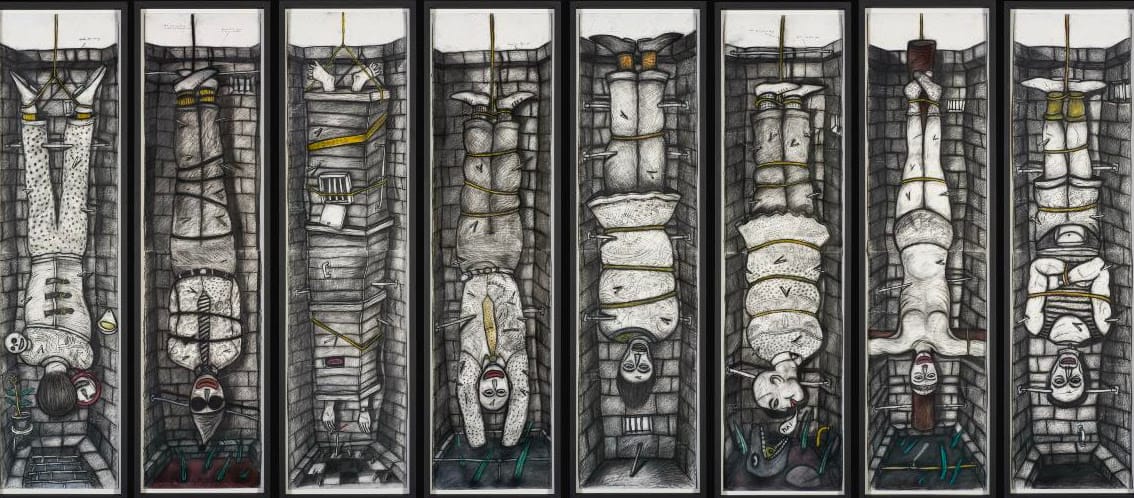
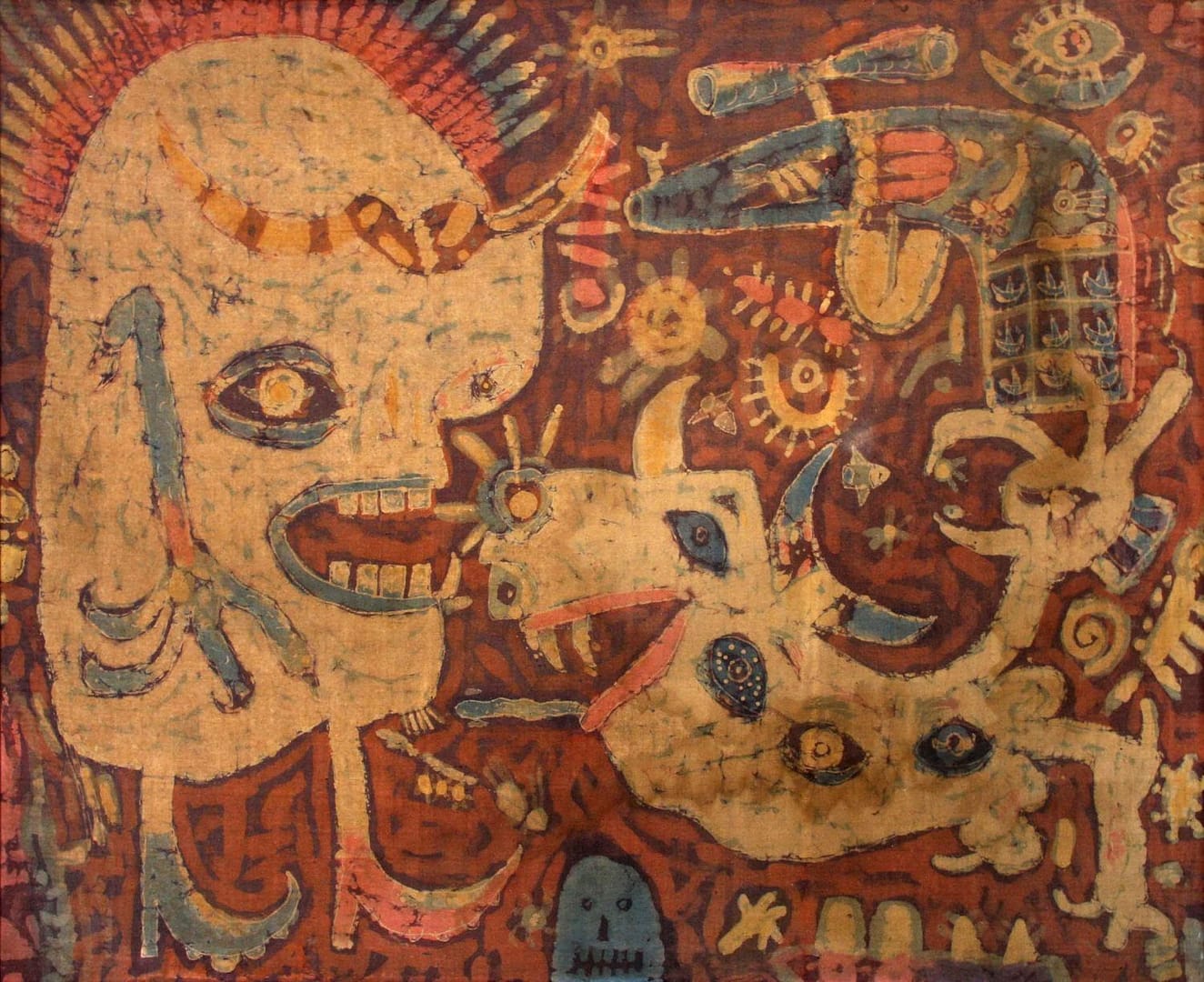
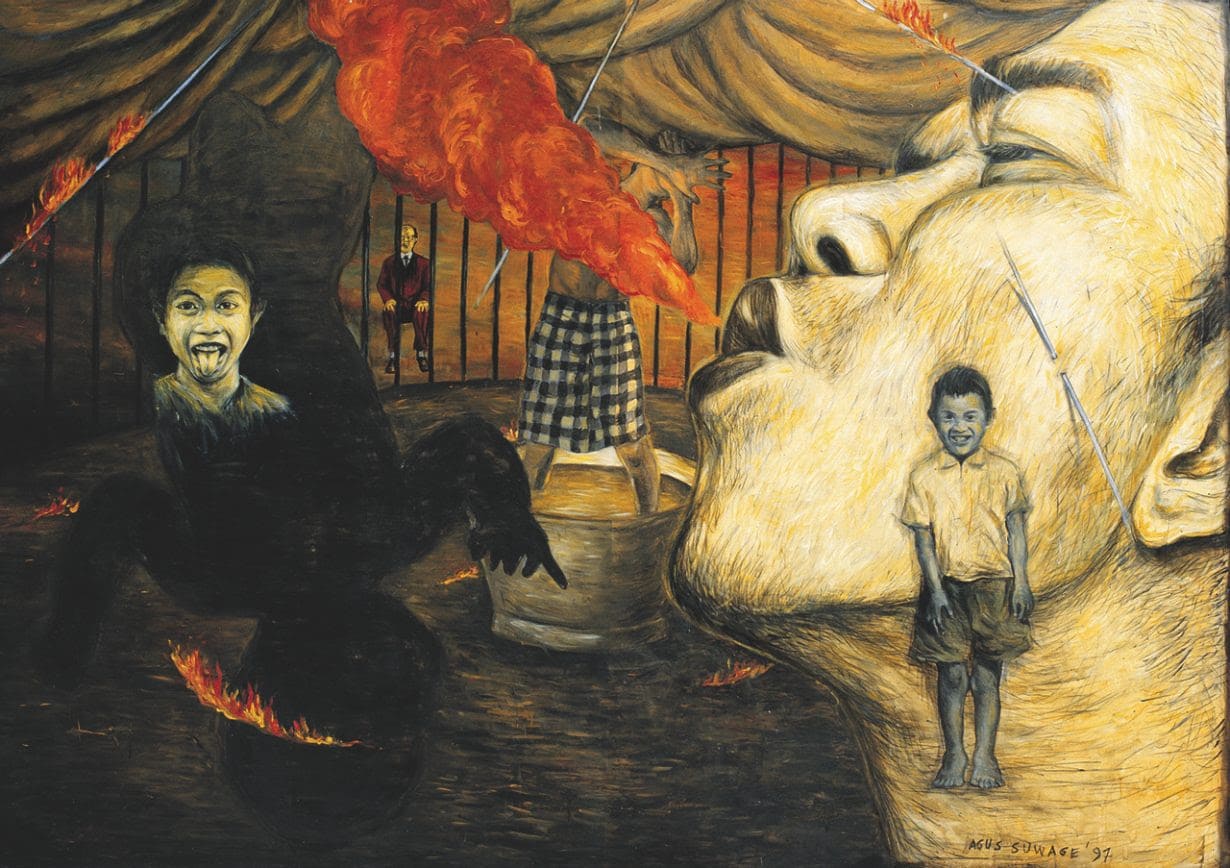
Images: Protest art by Indonesian artists Taring Padi, Heri Dono, and Agung Kurniawan reflecting the spirit of resistance
#IndonesiaGelap #PublicProtests #DemocraticRights #SocialJustice #EconomicPolicy